Updating an Existing Range
The customer needed to update an existing automotive color range for use in automotive paint mixing centers. Accurate color representation was the main objective.
AUTOMOTIVE REFINISHING · MANUFACTURING CASE STUDY
For a UAE-based automotive refinishing customer, PHOENiX Sample manufactured 1K and 2K color charts and fan decks in several-thousand-unit runs per format, with shipments distributed across multiple countries.
Project Overview
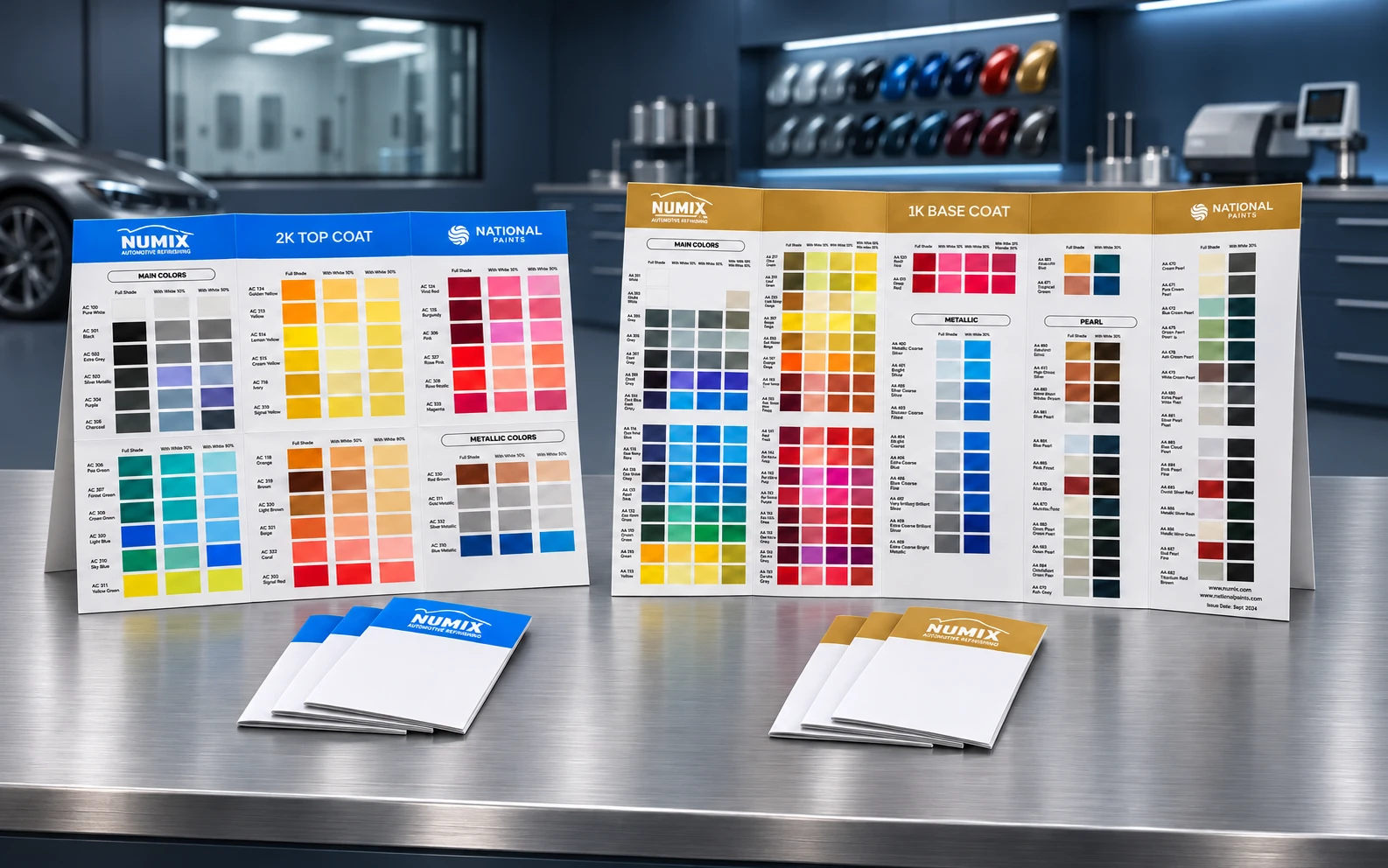
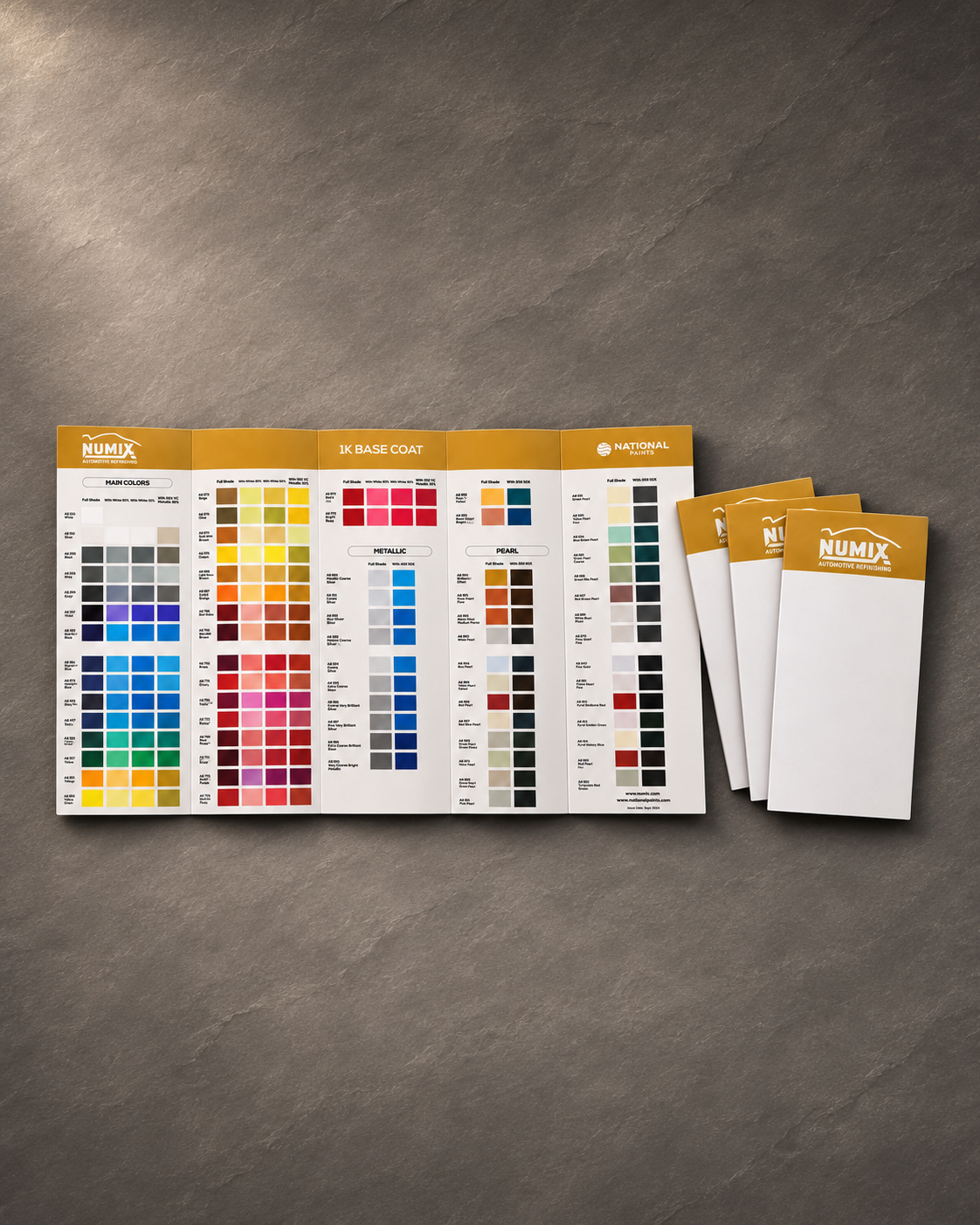
1K BASE COAT · 205 COLOR ENTRIES
PHOENiX Sample developed a coordinated automotive tinting guide for a customer based in the United Arab Emirates. The program covered 1K base coat and 2K top coat systems, each supplied as both a color chart and a fan deck.
Several thousand units were manufactured in each of the four formats. Completed products were shipped in different quantities to multiple countries, extending the project beyond a single local market.
The central requirement was consistency: a shade approved against the customer’s reference had to communicate the same appearance in a large-format chart and a fan deck, despite different application equipment.
The Technical Challenge
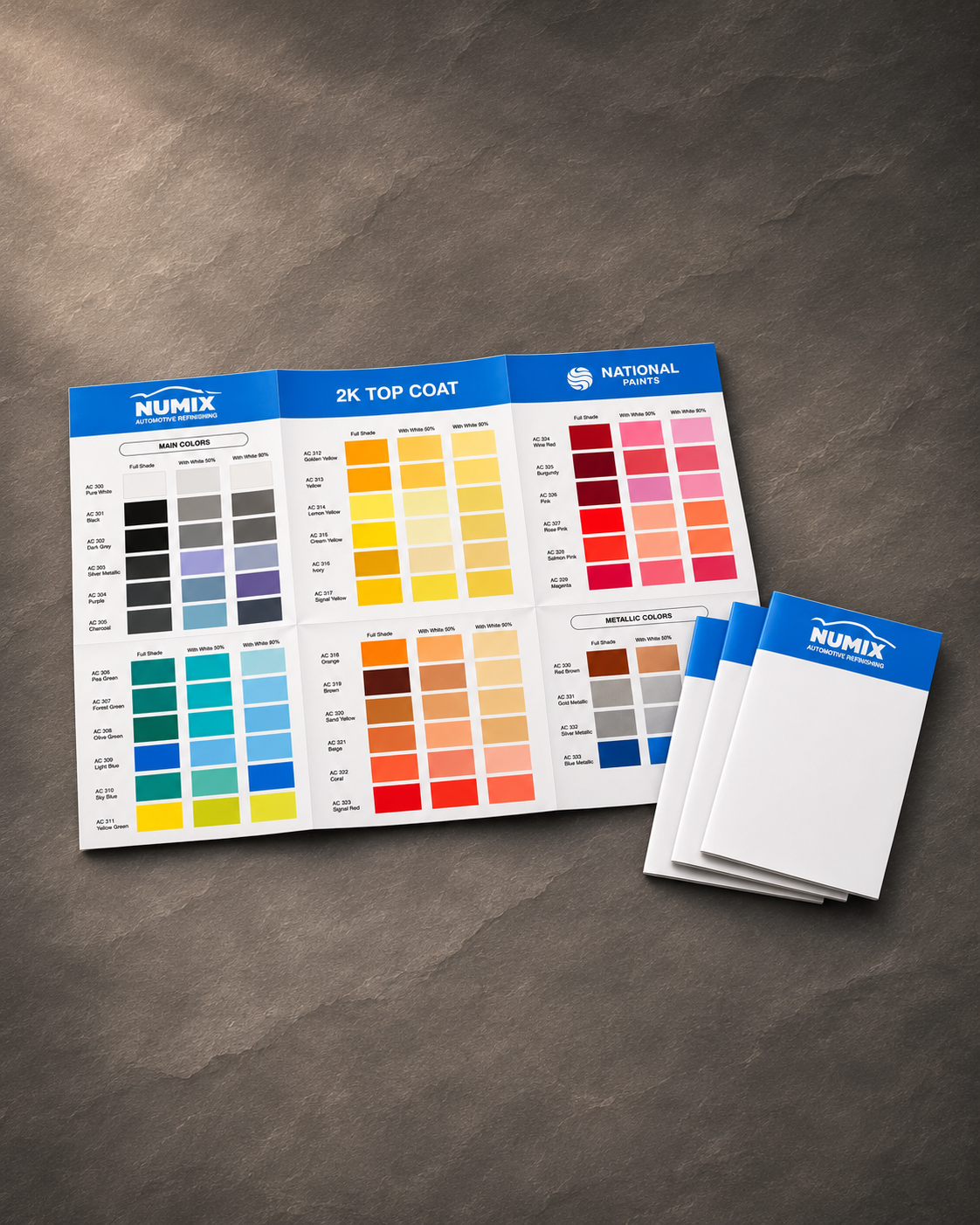
2K TOP COAT · 96 COLOR ENTRIES
Color charts were produced from large sheets using robotic spray application, while fan deck samples were produced using a coating machine. Both processes had to reproduce the same approved color references.
This transfer was especially sensitive for metallic and other effect finishes. Flake orientation, film build and viewing angle can influence the final appearance even when a shade uses the same reference formulation.
Quantified Color Program
The 1K system included 127 solid, 24 metallic, 40 pearl and 14 Xirallic entries. The 2K system included 88 solid and 8 metallic entries. The graph shows the documented finish mix, not the number of units manufactured.
| Paint system | Solid | Metallic | Pearl | Xirallic | Total |
|---|---|---|---|---|---|
| 1K | 127 | 24 | 40 | 14 | 205 |
| 2K | 88 | 8 | — | — | 96 |
| Total | 215 | 32 | 40 | 14 | 301 |
The total of 301 comprises 205 entries in the 1K system and 96 in the 2K system, with each system counted separately. An em dash indicates a finish not listed for that system.
Matching & Approval
After matching the customer’s color standards, 97% of shades were approved in the first submission. The remaining 3% were adjusted and accepted in the second round.
All colors approved after two matching rounds
These approval percentages describe the overall results for this project.
Effect Color Control
METALLIC APPEARANCE · DUAL-PROCESS CONTROL
Automotive metallic shades depend on how aluminum flakes distribute and orient within the coating. Small changes in application conditions can alter face color, flop, brightness and perceived texture—even between shades with similar appearances.
The project therefore required close comparison between robotic chart spraying and coating-machine application for fan decks. Pearl and Xirallic shades introduced further angle-dependent effects and needed the same attention to application consistency.
Manufacturing Method
Receive and classify the customer’s approved shades as solid, metallic, pearl or Xirallic.
Match the supplied standards and submit the first round for customer approval.
Check appearance after transfer from matching to the actual production machines.
Use robotic spraying for color charts and the coating machine for fan deck samples.
Monitor visual consistency, coating uniformity and effect appearance across both formats and production batches.
Complete assembly, inspect the finished products and deliver each of the four ordered formats.
FINISH MIX COMPARISON
A proportional view of the color entries: 1K combines solid, metallic, pearl and Xirallic shades; 2K includes solid and metallic shades.
Effect colors include metallic, pearl and Xirallic in 1K; the 2K effect group contains metallic colors only.
The customer needed to update an existing automotive color range for use in automotive paint mixing centers. Accurate color representation was the main objective.
Paint preparation involved both the customer and PHOENiX Sample. Customer-approved physical samples provided the matching references, and approvals were carried out in stages.
The principal matching challenge was pearlescent appearance. Aligning the appearance of robot-sprayed color charts and machine-coated fan decks was a core requirement. The team adjusted both paint preparation and application settings.
Samples were checked visually and with color-measurement instruments against the approved references. Following staged approvals, the color charts and fan decks were manufactured and delivered.
Quality Assurance
The approved physical standards remained the reference during production. Quality checks focused on color and effect appearance, coating uniformity, cross-process consistency, production repeatability and assembly.
The aim was a dependable visual reference for the end user, whether the color appeared on a chart or in a fan deck.
| Production stage | Quality-control focus |
|---|---|
| Reference evaluation | Classify supplied colors into solid, metallic, pearl and Xirallic finishes before matching. |
| Production transfer | Verify samples on the actual robotic chart-spraying line and fan deck coating line. |
| In-process comparison | Compare appearance, coating uniformity, effect behavior and shade consistency across both formats. |
| Finished products | Check batch-to-batch appearance and assembly quality across the four product categories. |
Quality was monitored throughout color matching, coating application, finishing and assembly.
Project Deliverables
The finished program covered all four combinations of paint system and presentation format, with several thousand units manufactured in each category.
Large-format color chart displaying 205 solid and effect color entries.
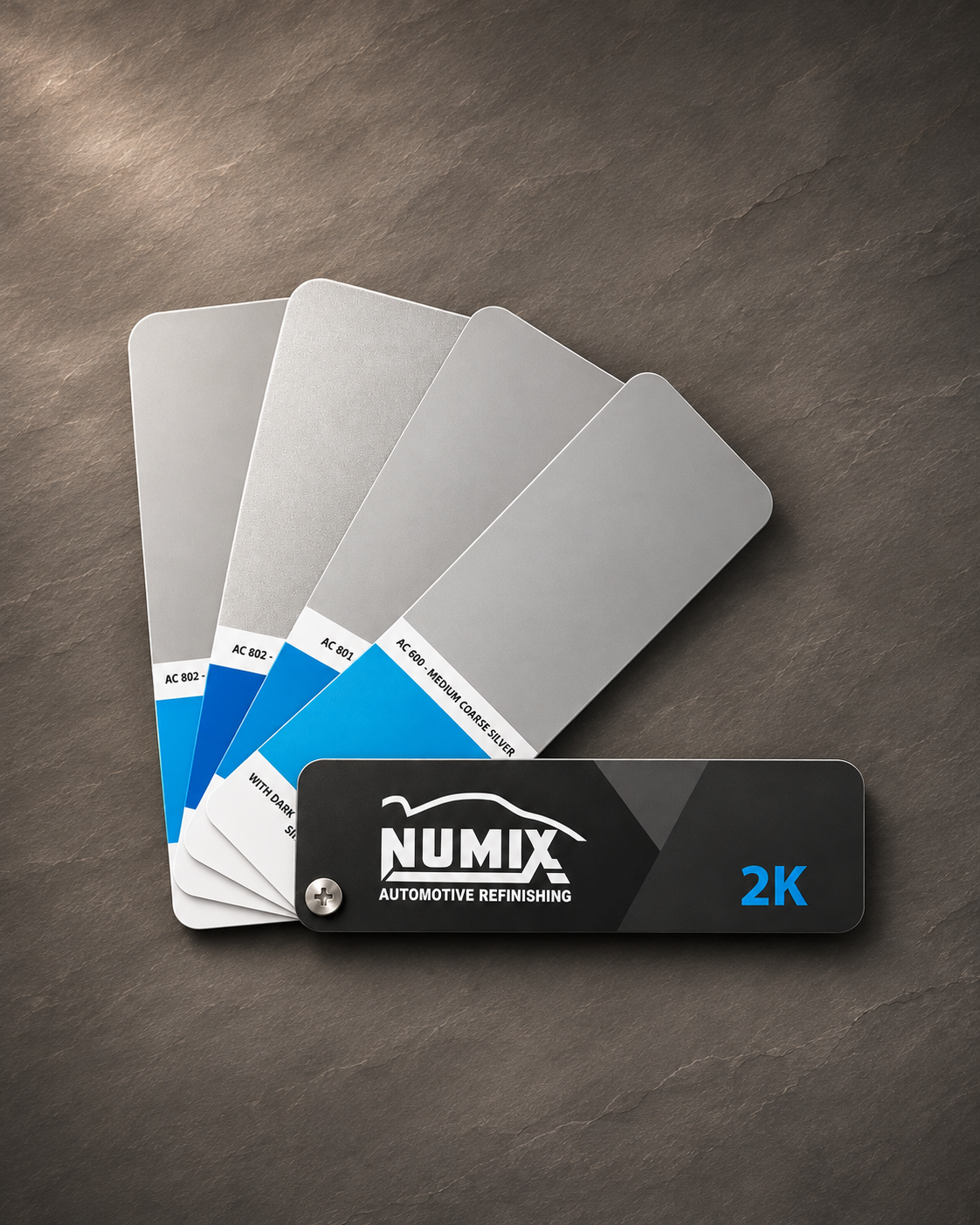
Compact fan deck manufactured using the coating machine.
Large-format chart presenting 96 solid and metallic entries.
Fan deck with a presentation box for the 2K color range.
Reported Results
The figures below summarize the completed program as reported in the project brief.
Color counts are entries across the two systems; they are not necessarily distinct shades. Exact shipment volumes and destination countries have not been disclosed.
MANUFACTURING INSIGHTS
An approved shade must also be reproduced on the actual production equipment. Matching results alone cannot establish consistency across two application technologies.
Metallic, pearl and Xirallic appearance depends on application conditions and viewing angle, making visual comparisons between processes essential.
Producing thousands of charts and fan decks requires consistent references and checks through coating, assembly and final inspection.
Related Expertise
PROCESS FLOW DIAGRAM
A clear view of the manufacturing stages used for this specific project.
Tell us about your paint system, color standards, finish types and quantities. PHOENiX Sample can help develop a consistent presentation program.
Discuss your next color sampling project with our team.