


Define the Reference
Review the target colors, finish expectations, intended market and intended use. Agree on the physical or documented reference against which samples will be assessed.


Turn approved color references into physical painted samples through coordinated coating, drying, inspection and finishing, tailored to your collection and chosen presentation format.
Professional color sampling begins with a different purpose from painting a wall or finishing a manufactured component. A color sample must communicate a selected shade and finish in a compact, repeatable and easy-to-use format. At PHOENiX Sample, the focus is on specialized coating systems formulated for color fan decks, color cards and related sample applications—not simply taking an ordinary decorative paint and placing it on a strip of paper.
The coating, substrate, surface finish and final product design need to work together. Our project-led approach connects those decisions so that the sample is practical to present, compare, organize and use across a customer-facing color collection.

Every collection has its own requirements. These six stages explain the production decisions that should be addressed when creating a professional color sample system.
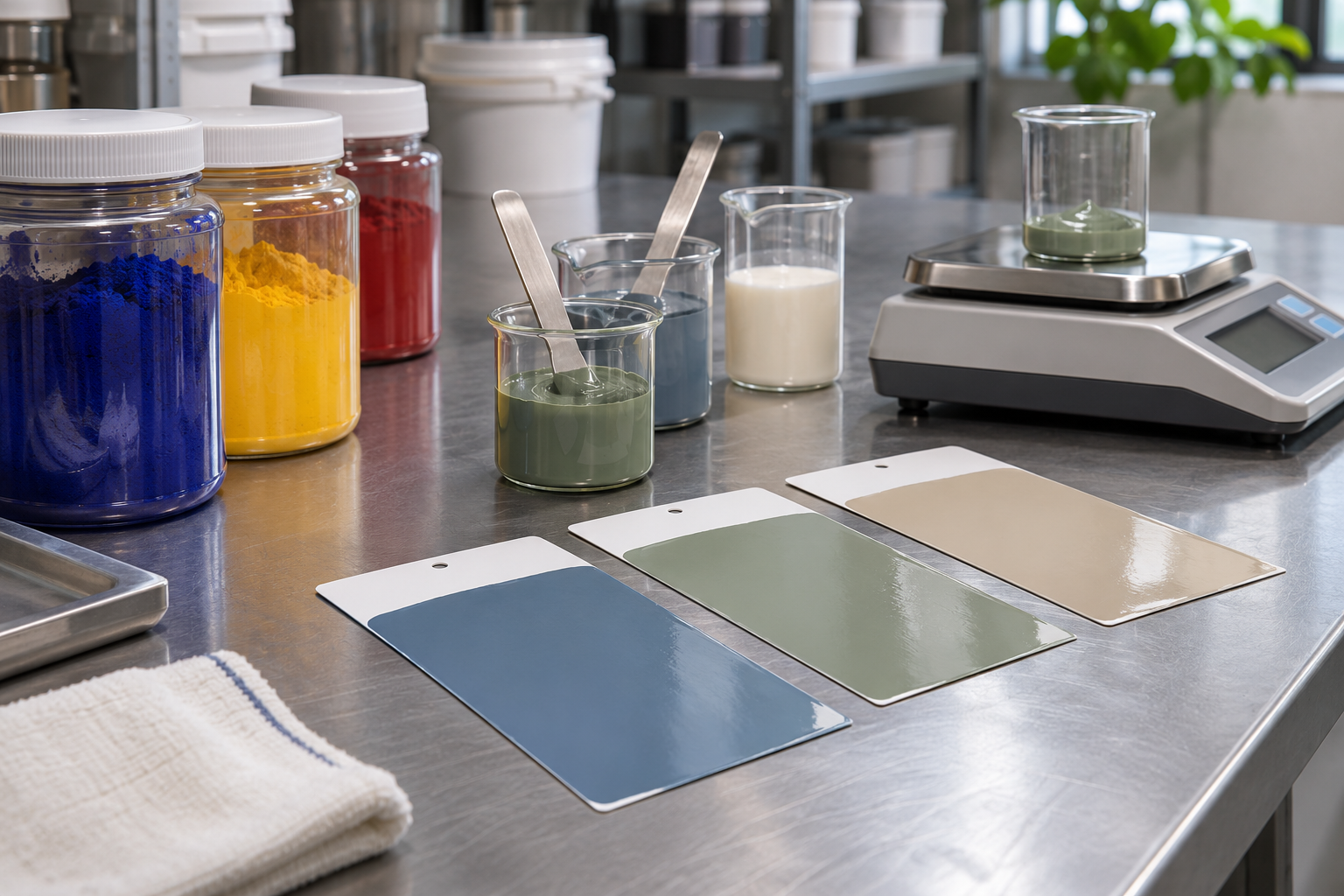
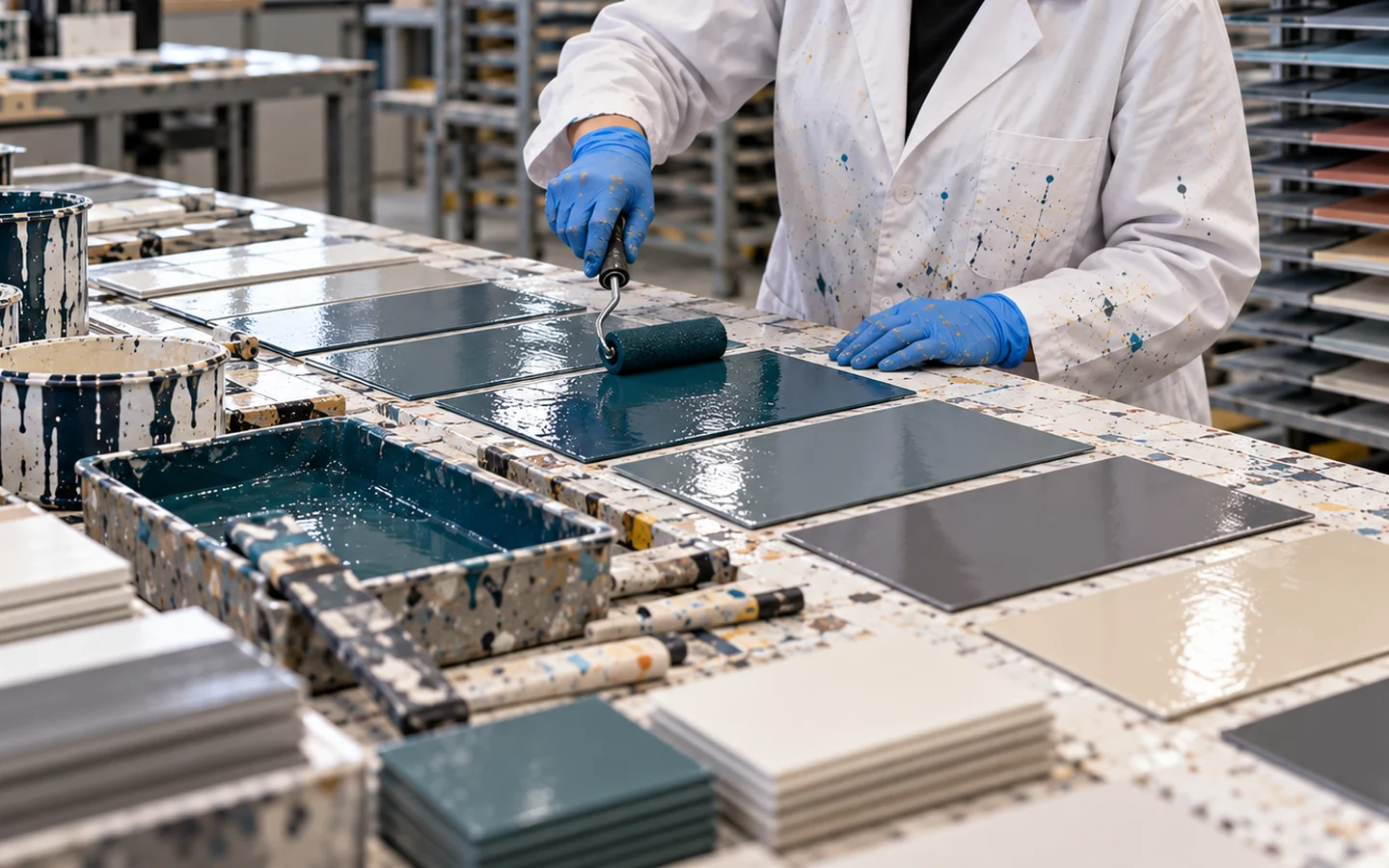
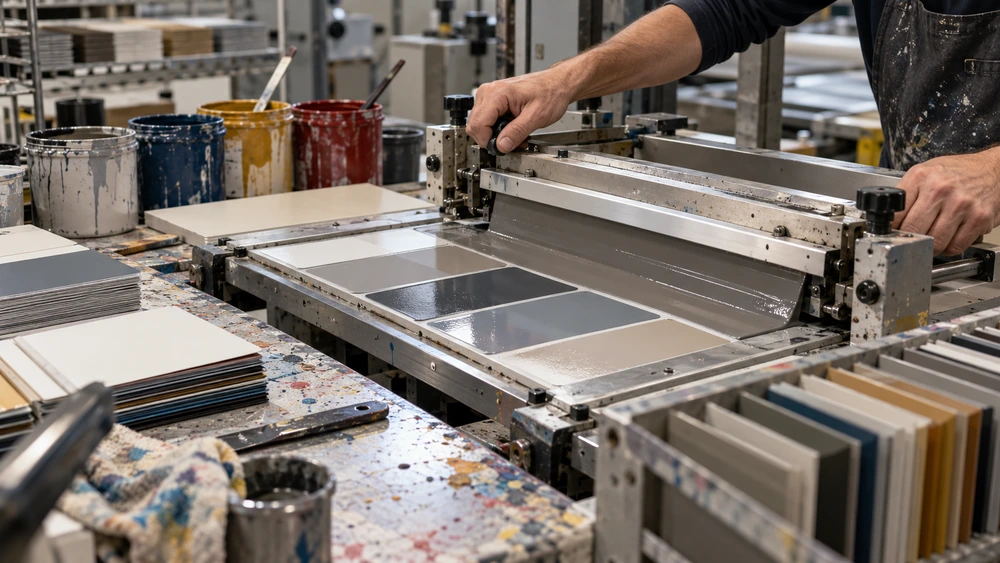
A coating intended for professional color sampling must be considered in relation to the sample-making process: how it applies to the selected substrate, how its appearance develops during drying, and how the finished sheet behaves during cutting, handling and assembly.

A name, RGB value or digital preview cannot fully specify how a real coated surface will look. Successful sample development begins with a suitable physical reference and agreed viewing and acceptance conditions.
Use an agreed target and defined assessment approach, rather than relying only on screen colors.
Consider gloss, texture and visual surface uniformity as part of the perceived result.
Review how the selected backing and specialized coating interact throughout production.
Define the practical appearance and handling requirements for an organized set of samples.

A fan deck and a large-format display panel may communicate the same color, but their manufacturing and handling requirements are not identical. Sheet dimensions, the substrate, the finished coating and assembly all influence how the product will perform.
Every collection has its own requirements. These six stages explain the production decisions that should be addressed when creating a professional color sample system.
Review the target colors, finish expectations, intended market and intended use. Agree on the physical or documented reference against which samples will be assessed.
Consider the card stock or other approved backing, sample dimensions, number of shades, orientation and handling needs of the finished color tool.
Use a specialized paint or coating system suitable for the proposed sample-production method. Review compatibility, appearance and applicable process requirements.
Apply the coating using the selected process, then allow the film to develop its intended appearance through suitable drying or curing conditions.
Assess color and visible finish against the agreed reference, taking into account sheen, surface uniformity and other project-specific acceptance criteria. Cut or finish the sheets as required.
Sort, sequence and assemble the samples into fan decks, color cards, chips or other branded color presentation systems ready for customer use.
Real production views from color-sample preparation, control and finishing.

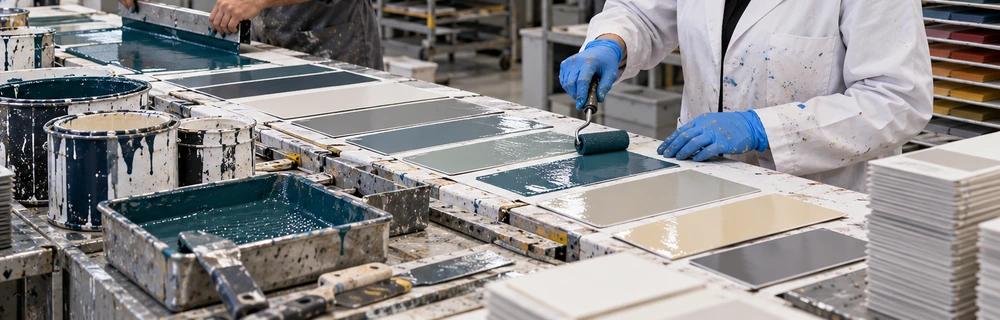

Printed references and coated samples serve different purposes. Printing can be useful for communication, layout and certain promotional applications. A coated sample can provide a more direct representation of a coating's visual surface characteristics when produced against an approved reference.
Particularly relevant when physical finish, coating appearance or tactile presentation matters to the decision.
Useful when graphic reproduction, communication speed, variable information or print economics are the primary requirements.
No. This page describes specialized coating systems intended for professional color-sample manufacturing. Exact formulations and the extent to which they replicate a commercial coating depend on the project's requirements.
Not necessarily. A sample may be designed for visual color and finish communication rather than chemical identity with the end-use coating. Requirements should be agreed before production.
Provide the target colors or approved references, required finish, intended substrate, number of colors, sample dimensions, anticipated quantities and desired presentation format.
A common coating approach may support different formats, but each product can require different sheet dimensions, cutting, mounting and assembly methods.
The sample should be compared with an agreed reference under suitable conditions, considering color as well as sheen, texture and surface uniformity. The applicable criteria are project-specific.
Discuss your next color sampling project with our team.