
COLOR TREND CASE STUDY
Sipes Color Trend | Market-Led Interior Paint Color Catalogue
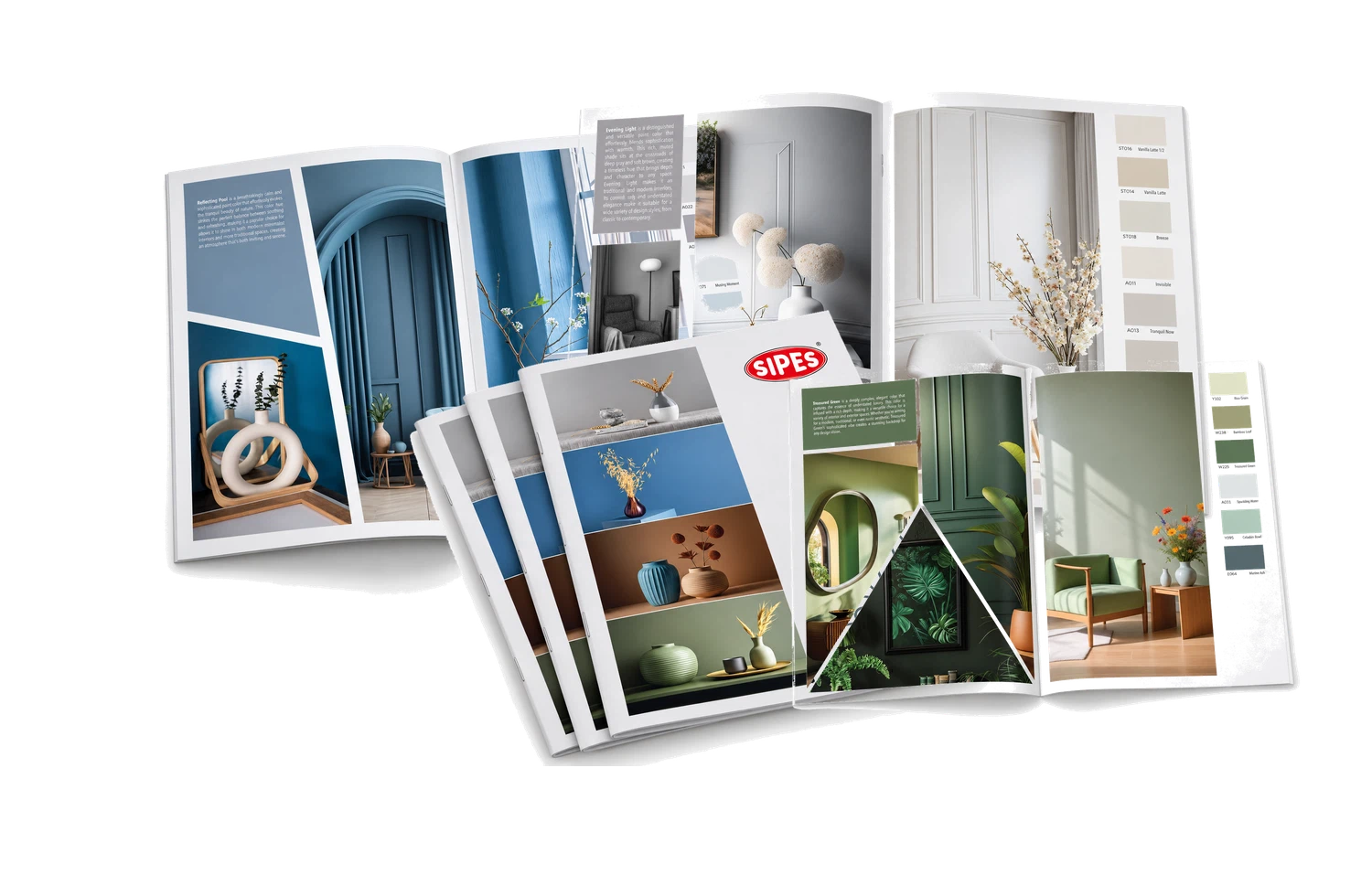
A curated 26-color interior paint trend catalogue, developed through target-market research, color selection and design, with 100% first-round approval.
COLOR TREND CASE STUDY
A Color Trend Catalogue Built Around Its Market
For the Sipes Color Trend project, PHOENiX Sample was responsible for studying the catalogue’s intended market, selecting a carefully curated set of 26 trend colors, and developing the catalogue design for an interior paint collection.
The aim was to connect color presentation with current style direction and the preferences of the intended audience. All 26 selected colors were approved in the first round, and the catalogue was produced in quantities of several thousand copies.
COLOR TREND CASE STUDY
Project at a Glance
ProjectSipes Color Trend
IndustryInterior paints
DeliverableColor trend catalogue
Palette26 selected colors
Project scopeMarket study, color selection and design
First-round approval100% of 26 colors
Production scaleSeveral thousand copies
Project focusMarket-led color trends
MARKET-LED COLOR DEVELOPMENT
From Target-Market Insight to Color Direction
PHOENiX Sample began with a study of the market for which the catalogue was intended. Rather than assembling a general-purpose color list, the project called for a color trend direction aligned with fashion and interior design preferences in that market.
This research informed a focused selection of 26 shades, curated by PHOENiX Sample to reflect the direction of the intended market and the creative positioning of the catalogue.
PROJECT DEVELOPMENT
A Connected Process from Research to Production
- 01Study the intended market
- 02Select 26 trend colors
- 03Develop the catalogue design
- 04Submit colors and obtain first-round approval
- 05Produce the approved catalogue in thousands
CATALOGUE PRODUCTION & FINISHING
From Real-Paint Samples to the Finished Catalogue
After the 26 selected shades were approved, PHOENiX Sample applied the real paint colors to physical samples and inspected the results for color and coating quality. The printed catalogue pages were produced separately on Heidelberg printing presses; printed color alone was not used as a substitute for real-paint samples.
After Heidelberg printing, a separate film-lamination layer was applied to the printed paper, followed by folding, straightforward page collating, saddle stitching (saddle staples) and final trimming. The finished real-paint color chips were then mounted inside the catalogue, combining professional print production with physical paint-color presentation.
- 01Apply the approved colors to real-paint samples
- 02Inspect color accuracy and coating quality
- 03Print catalogue pages on Heidelberg presses
- 04Apply film lamination to the already-printed paper
- 05Fold the printed sheets
- 06Collate the folded printed pages in order
- 07Saddle-stitch the catalogue with staples
- 08Trim the catalogue to its final size
- 09Mount the real-paint color chips inside
- 10Final inspection and catalogue finishing
- 11Place each finished catalogue in an individual self-adhesive bag
- 12Pack protected catalogues into shipping cartons
- 13Ship and deliver the completed catalogues
After real-paint color chip mounting, each catalogue undergoes final finishing and inspection. Every completed catalogue is placed in an individual self-adhesive bag, packed into shipping cartons, then shipped and delivered.
CURATED PALETTE
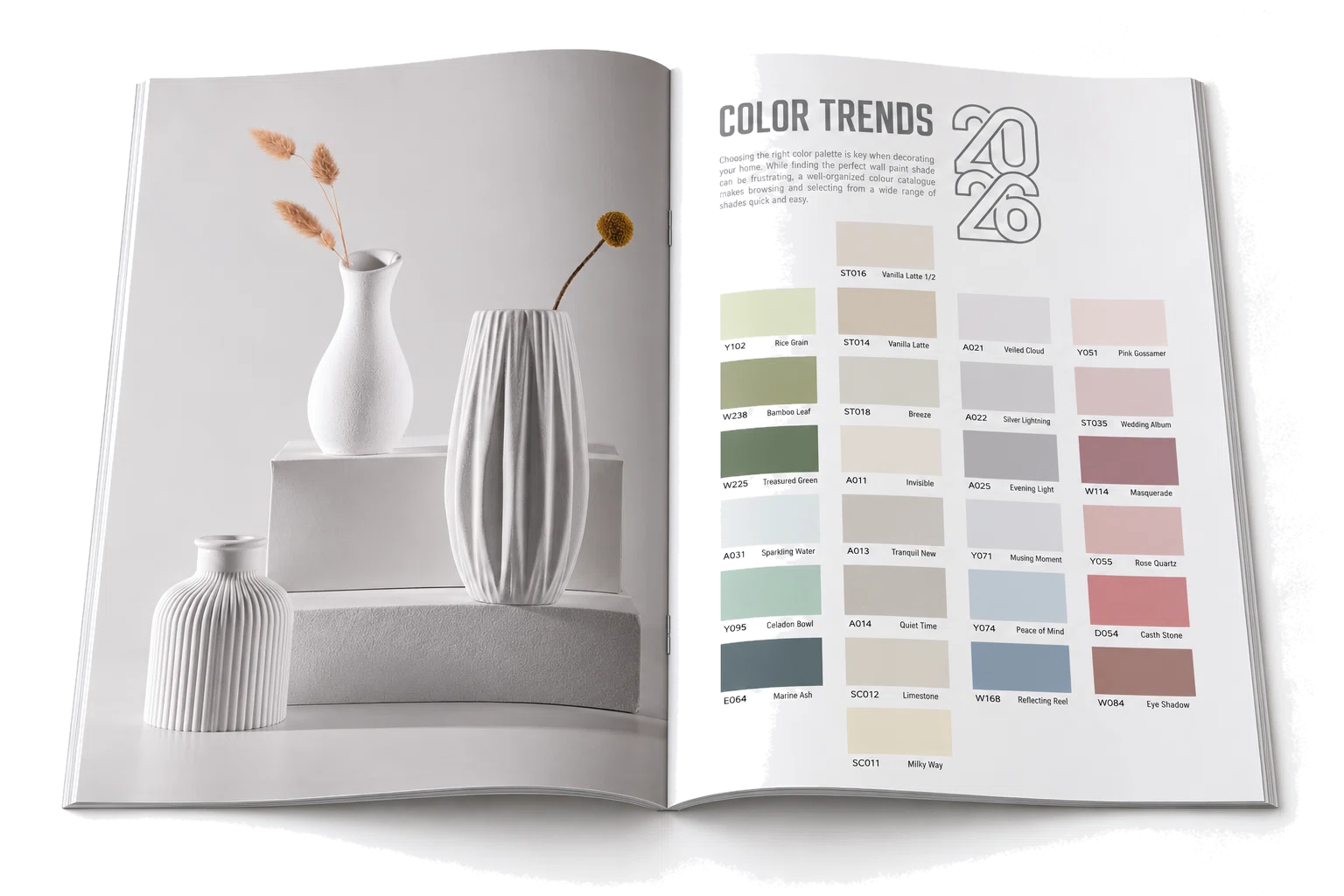
26 Colors Selected by PHOENiX Sample
The 26-color palette was selected by PHOENiX Sample following its market study. The project treated color choice and presentation design as one coordinated program, linking the intended audience’s tastes to a focused catalogue.
The color selection and the catalogue design were developed as one coherent presentation concept, ensuring the palette felt intentional rather than assembled at random.
CATALOGUE DESIGN
Turning the Color Concept into a Catalogue
PHOENiX Sample also developed the catalogue design. The design task was to present the 26 selected colors as a coherent interior paint trend collection, balancing the palette concept with a professional physical presentation.
This is an end-to-end color presentation project: market context, palette curation, catalogue design, approval and large-volume production formed one connected workflow.
MEASURABLE APPROVAL
100% of Colors Approved in the First Round
The client approved all 26 selected colors at the first submission: a 100% first-round approval result for the Sipes Color Trend project.
Following approval, the project moved into production, with a quantity of several thousand catalogues.
First-round color approvals100%
26 of 26 selected colors approved at the first submission
26 / 26
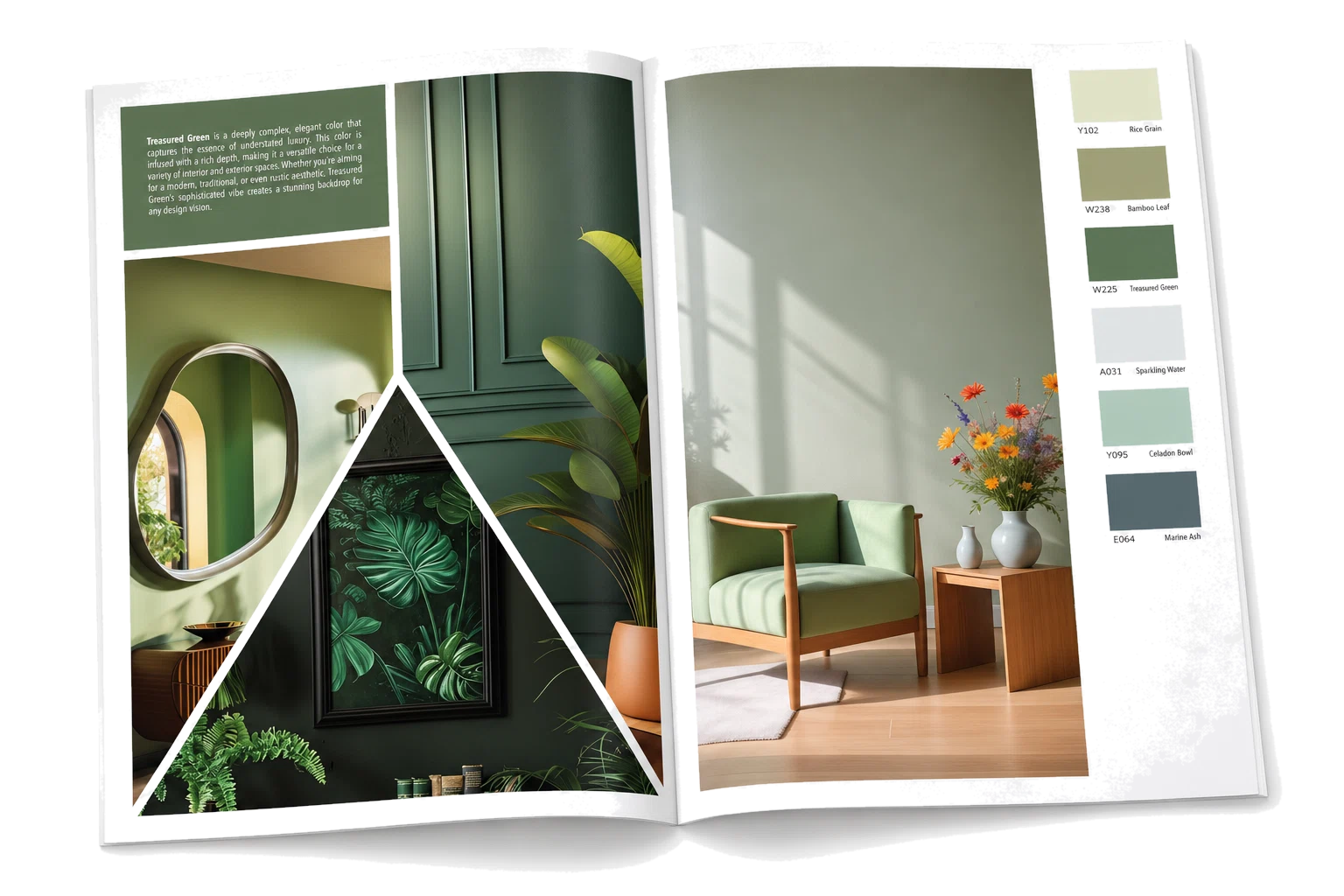
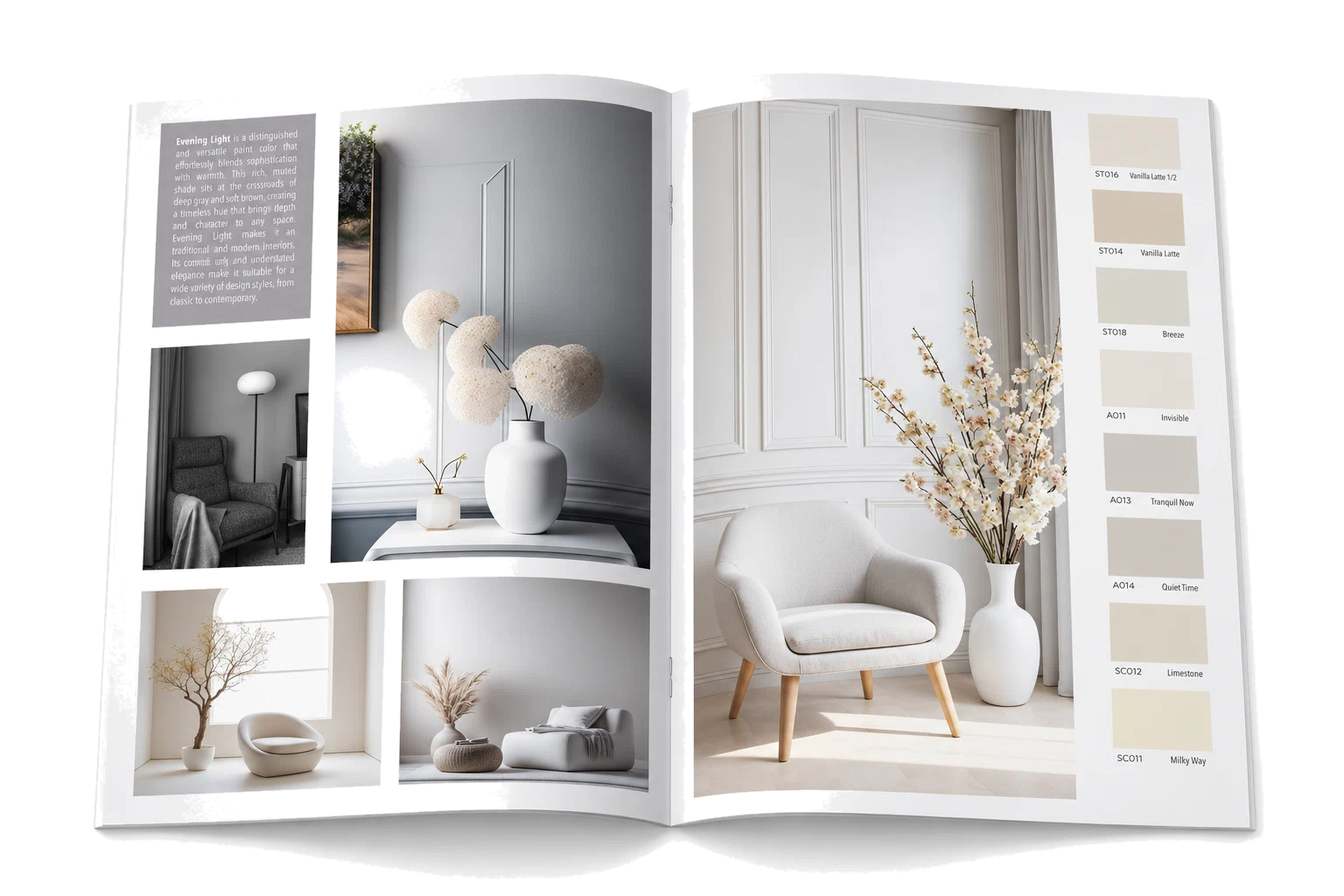
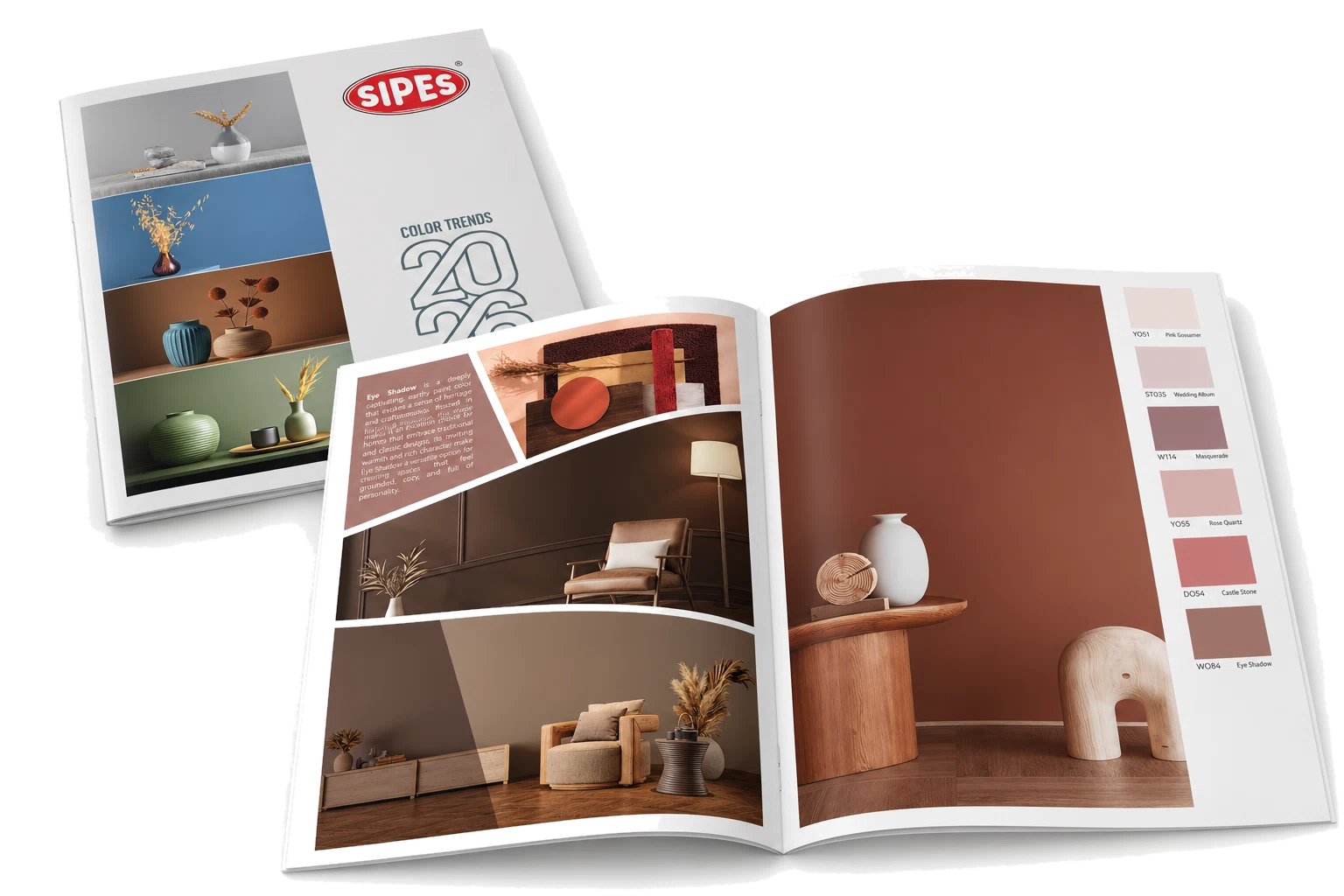
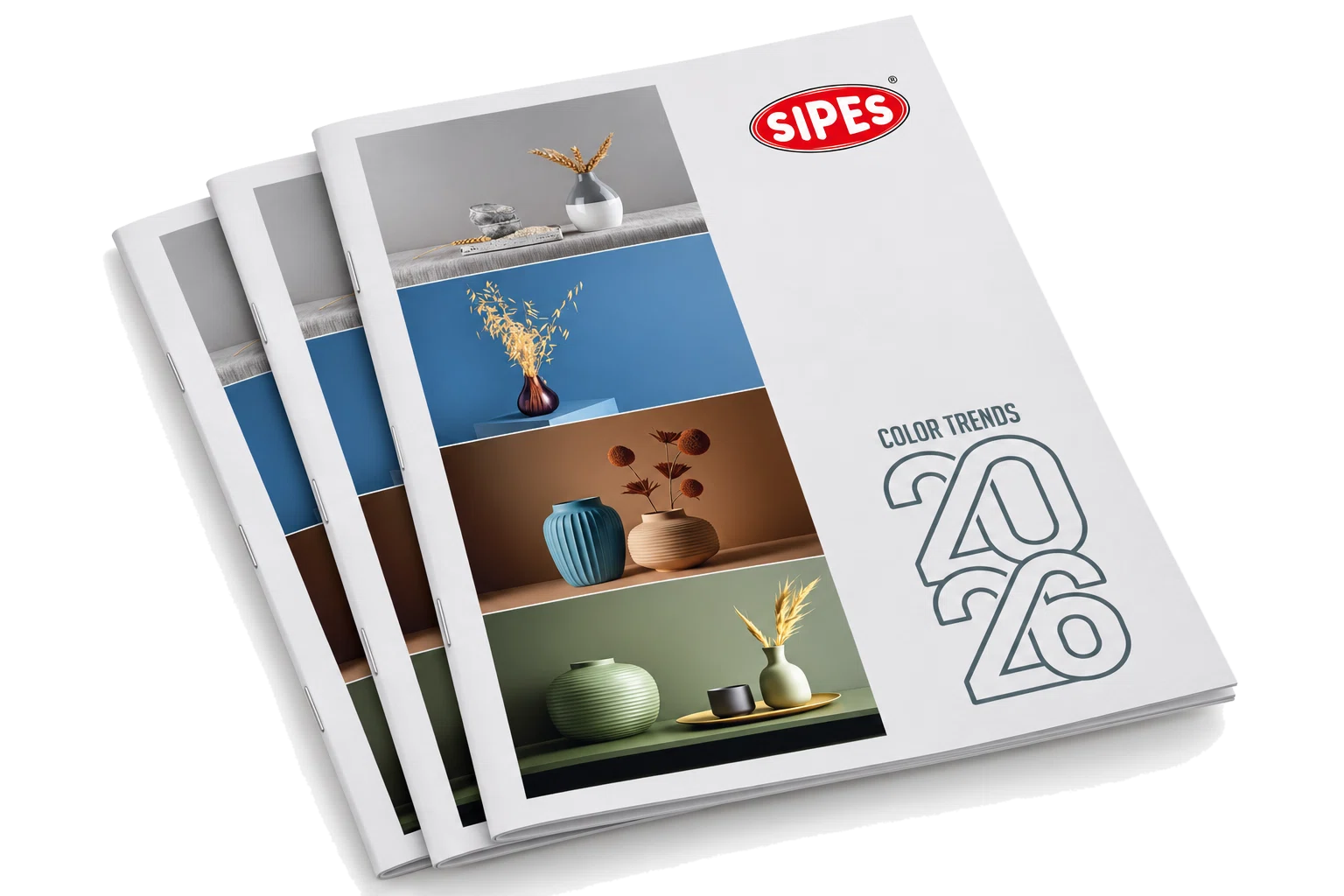
A Closer Look at the Finished Catalogue
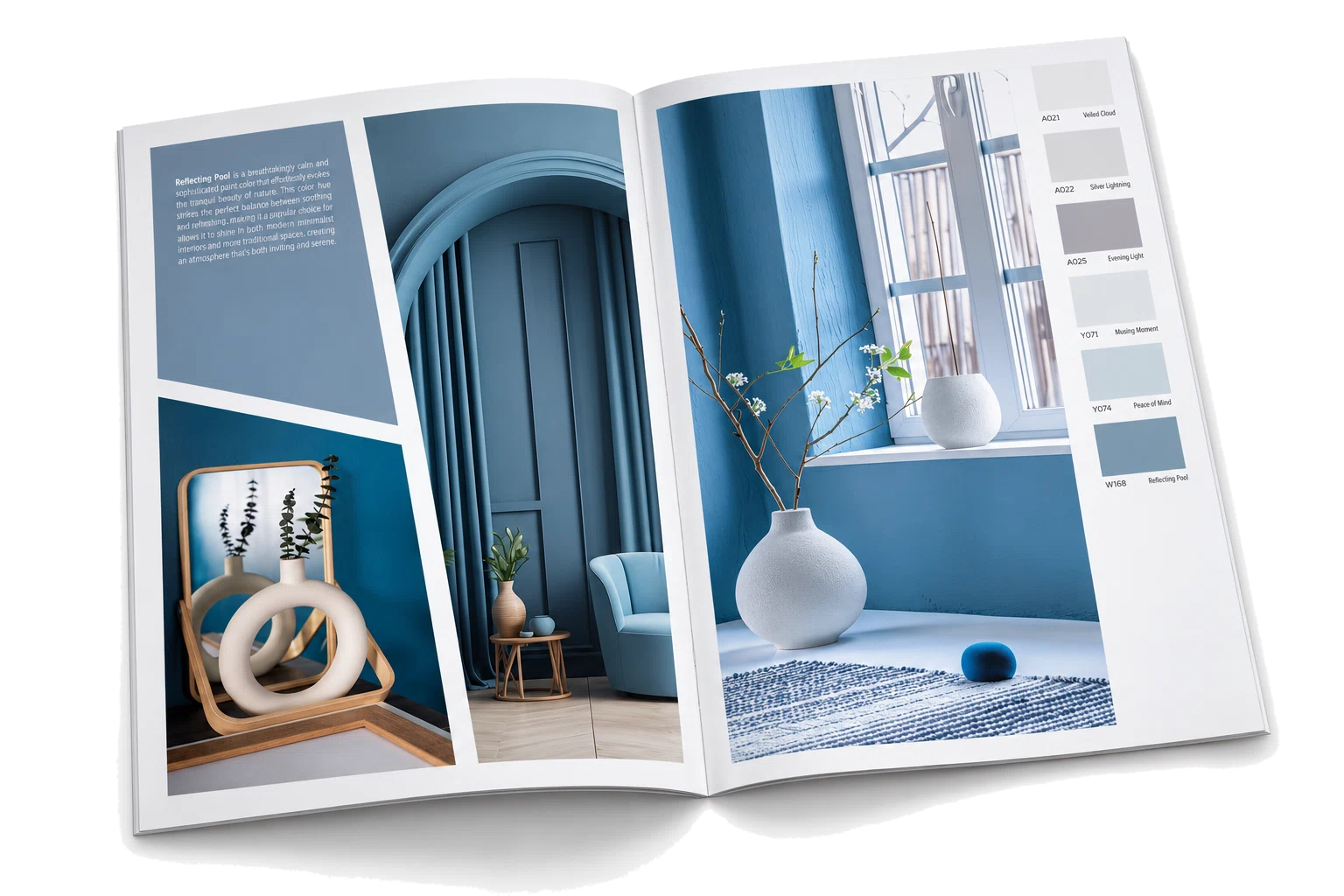
Selected views of the interior color-trend catalogue: palette selection, editorial layouts and coordinated interior applications.
PROJECT RESULTS
Results That Connect Creativity and Delivery
Project Questions
What was PHOENiX Sample responsible for?
Studying the target market, selecting 26 trend colors, developing the catalogue design and producing the approved interior paint color trend catalogue.
How were the colors selected?
PHOENiX Sample selected the 26 shades after studying the intended market and its fashion and interior design direction.
How many colors were approved in the first round?
All 26 selected colors, representing a 100% first-round approval result for this project.
What was the production volume?
Several thousand copies of the finished catalogue. An exact quantity was not supplied.
How were the catalogue pages and real-paint samples produced?
The approved paint colors were applied to physical samples and quality-checked. Catalogue pages were printed on Heidelberg presses, laminated after printing, folded, collated, saddle-stitched and trimmed. Real-paint color chips were then mounted inside the finished catalogue; they were not merely printed color swatches.
Explore related capabilities
PROCESS FLOW DIAGRAM
Project Production Process
A clear view of the manufacturing stages used for this specific project.
Color development
- Color Trend Research & Selection
- Catalog Design & Approval
- Real-Paint Color Application
- Color Quality Control
Printing & protection
- Heidelberg Offset Printing
- Post-Print Lamination
Binding & sample mounting
- Folding
- Collating
- Saddle Stitching
- Final Trimming
- Actual Color Chip Mounting
Final finishing & delivery
- Final Finishing & Inspection
- Individual Self-Adhesive Bag
- Carton Packing
- Shipping & Delivery
Planning a Market-Led Color Catalogue?
Discuss trend palette development, color presentation design or catalogue manufacturing for your paint brand.
Discuss Your Project