


PHOENiX Sample · 3 min read · Last updated
There is no single sample size that serves every color decision. A compact chip may be excellent for locating a shade in a large range, while a larger board is more useful for judging a wall field beside surrounding materials. Treating size as a simple quality ranking misses the purpose of the sample.
The right question is what the user must learn at that stage. Identification, comparison, material assessment and application approval require different kinds of evidence.
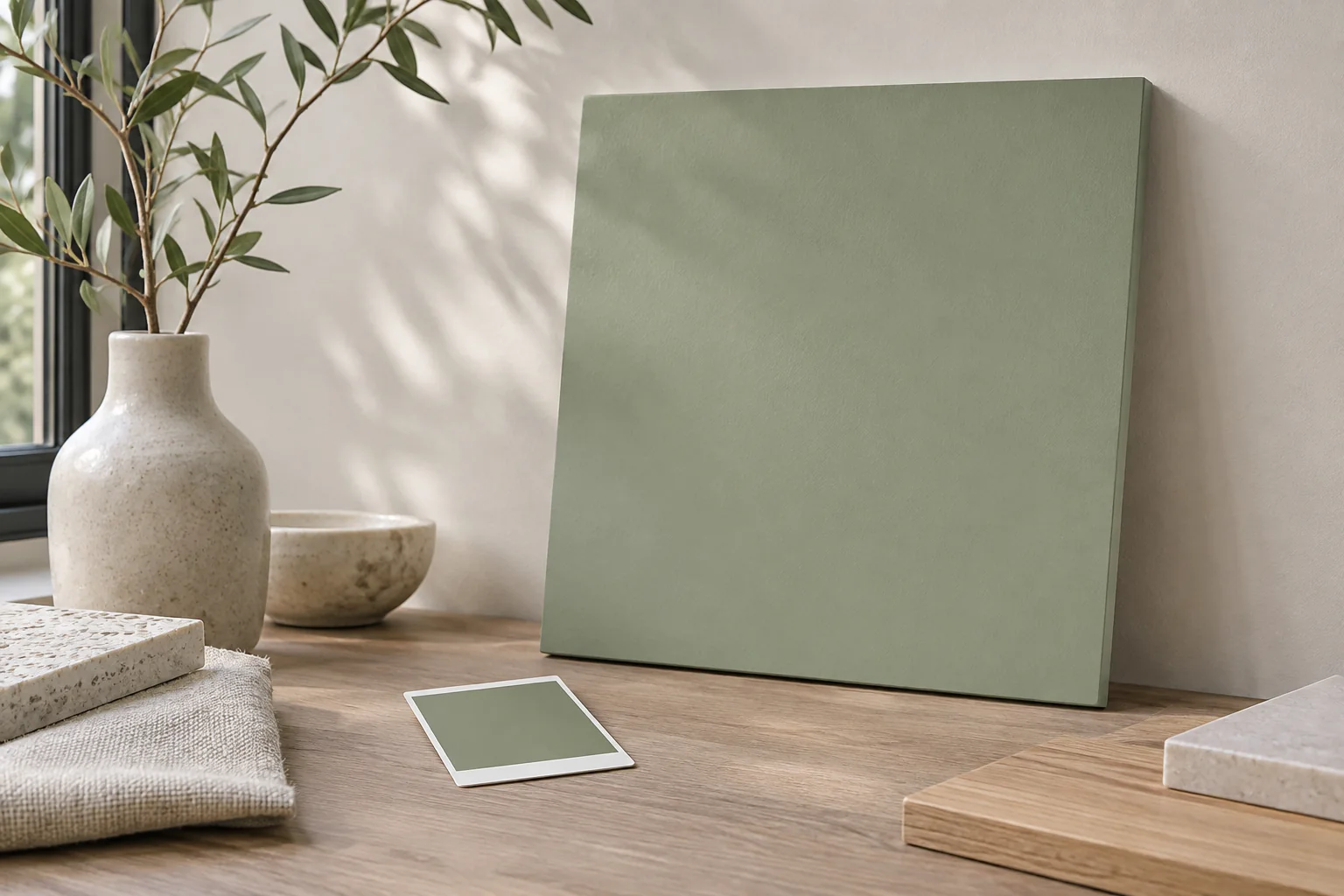
AI-generated concept illustration: A small chip and a larger painted board in an interior.
Start with the task, not the available format
A small sample supports efficient browsing and portability. It can help narrow a large collection into a shortlist. A larger area gives more room to inspect surface uniformity, texture and the relationship to nearby materials. A site mock-up adds application and spatial context.
Define these roles before choosing dimensions. The design team should be able to explain why a particular sample is large enough for its task and what decision it is not intended to settle. This prevents the selection chip from becoming an accidental final approval standard for a complex finish.
Consider the character of the surface
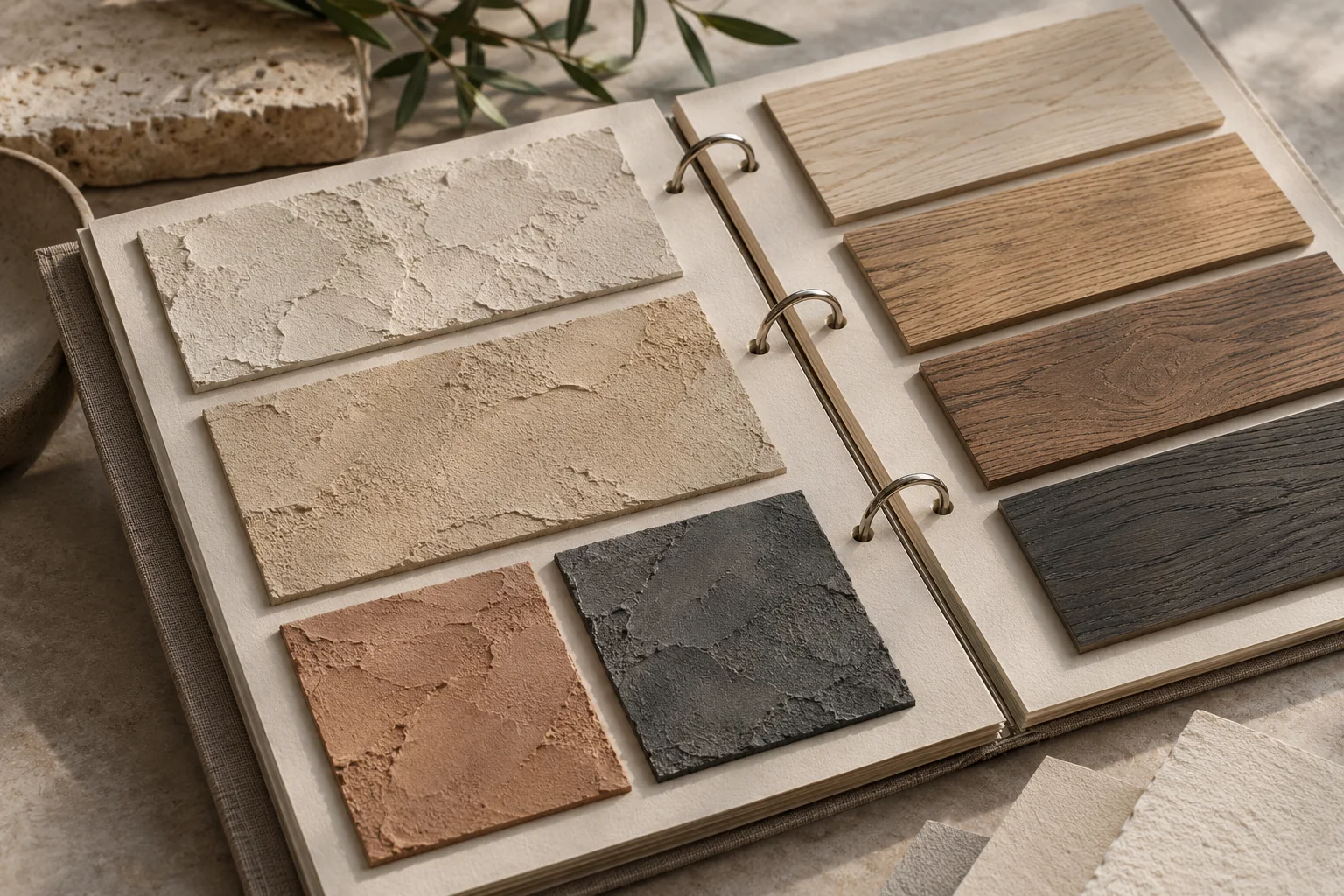
Uniform solid colors and strongly textured finishes do not demand the same representation. A small cutout may omit the broad movement that gives a decorative coating its identity. A metallic finish may need room and freedom to tilt the sample so that angle-dependent behavior can be observed.
Select representative materials for the prototype. The easiest shade in the range is not sufficient evidence that the format works for all of it. Include subtle neutrals, deep colors and any finishes whose texture or reflection creates a distinct viewing task.
Keep comparison conditions consistent
When comparing candidate shades, use comparable sample sizes and finishes unless the difference itself is being studied. Place them in a consistent orientation and review them under relevant lighting. Otherwise, a preference may be influenced by presentation rather than by the intended color relationship.
The CIE colorimetry framework makes clear that color assessment depends on specified conditions. In practical design work, that encourages a disciplined transition from controlled comparison to contextual review rather than assuming that one observation can stand for every situation. [1]
Move to scale when the uncertainty demands it
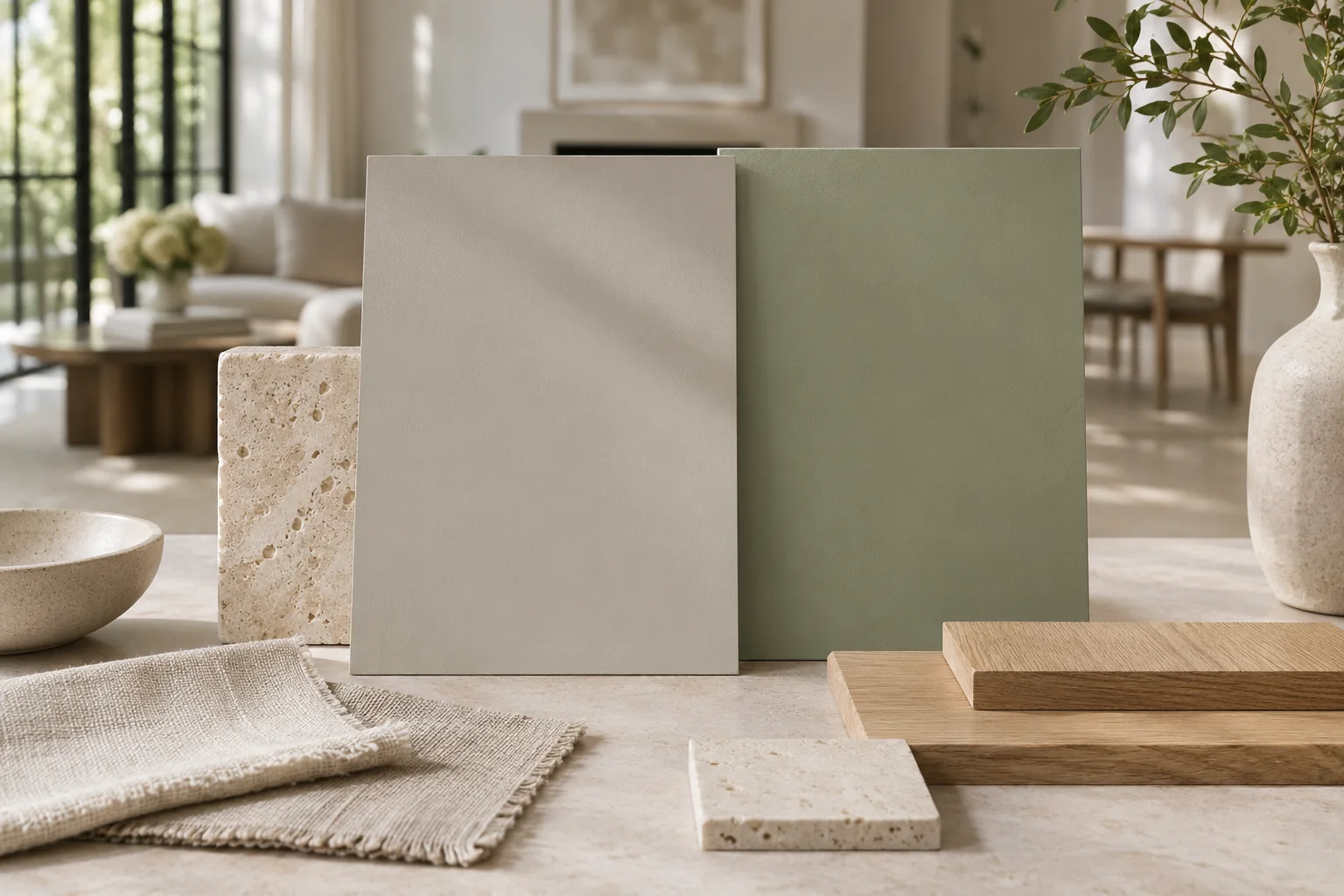
An illustrative project may narrow twelve neutral chips to three candidates. At that point, larger boards placed beside the actual floor and joinery can answer a question the small chips could not: which candidate creates the intended relationship across the space?
A full mock-up may then be justified if application texture, seams, lighting or workmanship remain uncertain. Each increase in scale should answer a defined question. Producing a large sample without a review plan can add cost while leaving the decision just as subjective.
Record the approved level of evidence
State whether the decision concerns the shade, the finish, the application or the complete installed appearance. Keep the selected physical reference connected to the project record. If a later sample is prepared differently, identify the change rather than assuming it has inherited approval from the smaller chip.
Check the finalist at a larger scale
Use the small card to shortlist two shades. Prepare a larger panel for each finalist with the intended paint system, substrate and finish. Compare the panels side by side at the installation, then inspect each on its own from the intended viewing distance. Record the panel dimensions and lighting in the approval. If the ranking changes, check coating build and the surrounding surfaces before attributing the change to size. Benjamin Moore — Using paint color samples
Practical conclusion
Sample size is a tool for reducing a particular uncertainty. Used in a staged process, small formats keep exploration efficient and larger formats make final decisions more informed. The value comes from matching the evidence to the question, not simply from making every sample larger.