



PHOENiX Sample · 3 min read · Last updated
An architectural palette becomes a specification through a sequence of decisions. Early images establish direction, small samples narrow the range and larger mock-ups test the selected materials in context. Problems arise when one stage is asked to do the work of another, such as treating a digital mood board as final paint approval or using a small chip to settle the appearance of an entire facade.
A clear sampling strategy gives each stage a purpose and keeps the chosen references connected as the project develops.
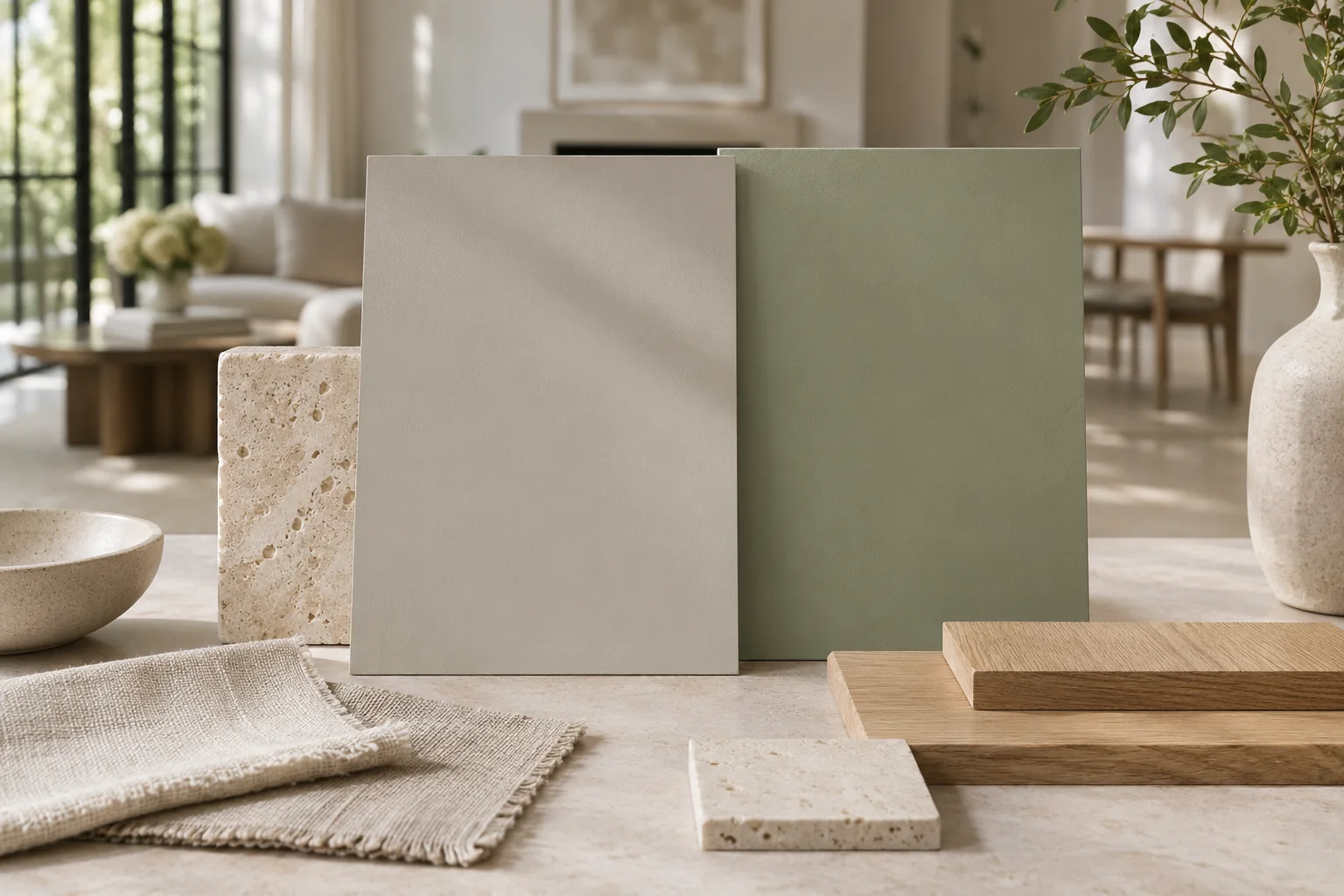
AI-generated concept illustration: Large painted boards reviewed beside stone, wood and textile samples.
Define the role of each sample
A selection sample helps the designer compare alternatives. An approval sample records an accepted appearance. A site mock-up tests the material in a representative application. These objects may look similar, but their authority is different.
Label them accordingly. Record the product, finish, substrate, application information and revision where relevant. An attractive trial that has not been approved should not acquire authority merely because it remains on the project desk after a meeting.
Build the palette around real adjacencies
Bring together the materials that will meet: wall finish, flooring, joinery, metalwork and textiles where they influence the scheme. Consider their relative areas and the intended visual hierarchy. A small accent sample should not be given the same importance as the dominant wall field simply because both chips have equal size.
The CIE identifies the area surrounding a sample as one factor that shapes perceived color. For an architectural team, this supports reviewing combinations physically. The objective is to understand how the materials work together, not to force every surface into a near match. [1]
Plan the transition to the site
Identify which decisions require larger samples and under what conditions they will be reviewed. Use representative locations and the intended finish. Where lighting is still provisional, record that limitation and schedule the relevant review when the actual condition becomes available.
A mock-up should answer a specific question. It might test the relationship between wall and stone, the visibility of texture or the effect of a finish on a large surface. Without that purpose, the team may produce expensive samples yet leave the original uncertainty unresolved.
Keep comments traceable
| Stage | Decision | Record |
|---|---|---|
| Concept palette | Overall direction | Candidate identifiers and material relationships |
| Physical selection | Preferred colors and finishes | Sample revisions and review conditions |
| Mock-up | Suitability in application | Location, method and observations |
| Final approval | Authorized appearance | Signed or otherwise controlled approval record |
Consolidate feedback through the agreed project authority. Separate a request for a different shade from a concern about application quality. “Too dark in the corridor” may require a lighting or context review; visible streaking may require an application investigation. Treating both as a color change can create unnecessary revisions.
Hand over a usable reference
The contractor and supplier need the final identifiers and approved samples, not an entire folder of unmarked alternatives. Keep the approved master connected to its specification and clearly withdraw superseded versions from active use.
Give the mock-up a decision to resolve
For a textured wall beside stone trim, use the specified substrate, primer and finish on a panel large enough to show the pattern repeat. Review the actual junction under the planned lighting. Record the location, viewing distance, application method and accepted panel ID. If lighting is provisional, log the open decision and arrange a review once the intended fittings are installed. Determine panel dimensions from the project specification. UFGS 09 90 00 — Textured wall coating mock-up
Practical conclusion
Digital visualizations remain useful for communication, but the ICC's guidance on display calibration underlines the conditions needed even for consistent image reproduction. A screen should not be expected to prove the physical finish of a coating. The final package should explain what was approved, how it was assessed and what evidence will be used when the installed work is reviewed. [2]