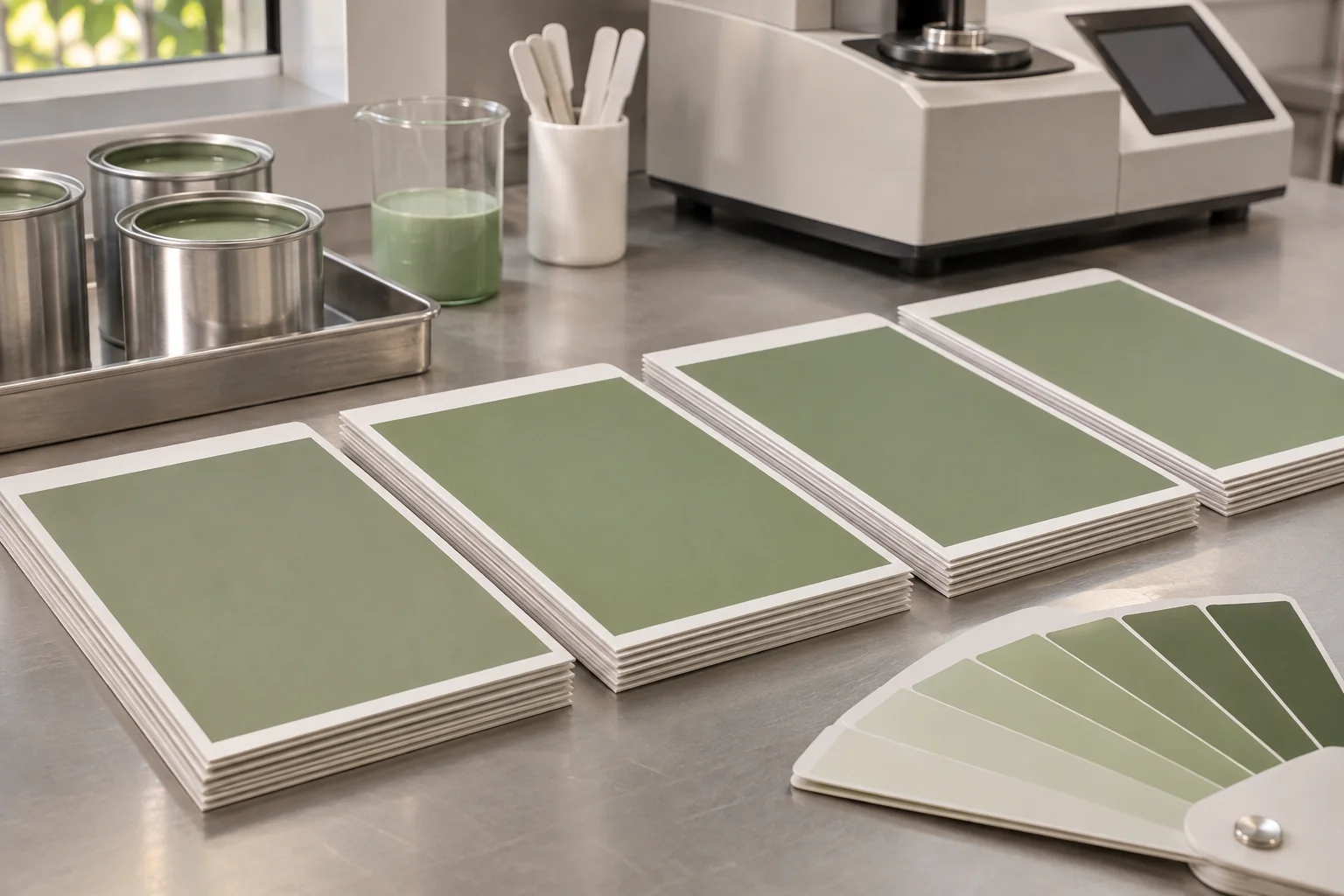



PHOENiX Sample · 3 min read · Last updated
A coating that feels dry enough to touch is not automatically ready for every later operation or assessment. Drying and curing involve stages, and the relevant state depends on the material and the task. A sample prepared for color evaluation, a sheet about to be stacked and a finished chip ready for packaging may require different checks.
The production workflow should therefore define readiness rather than relying on an informal impression that the surface looks dry.
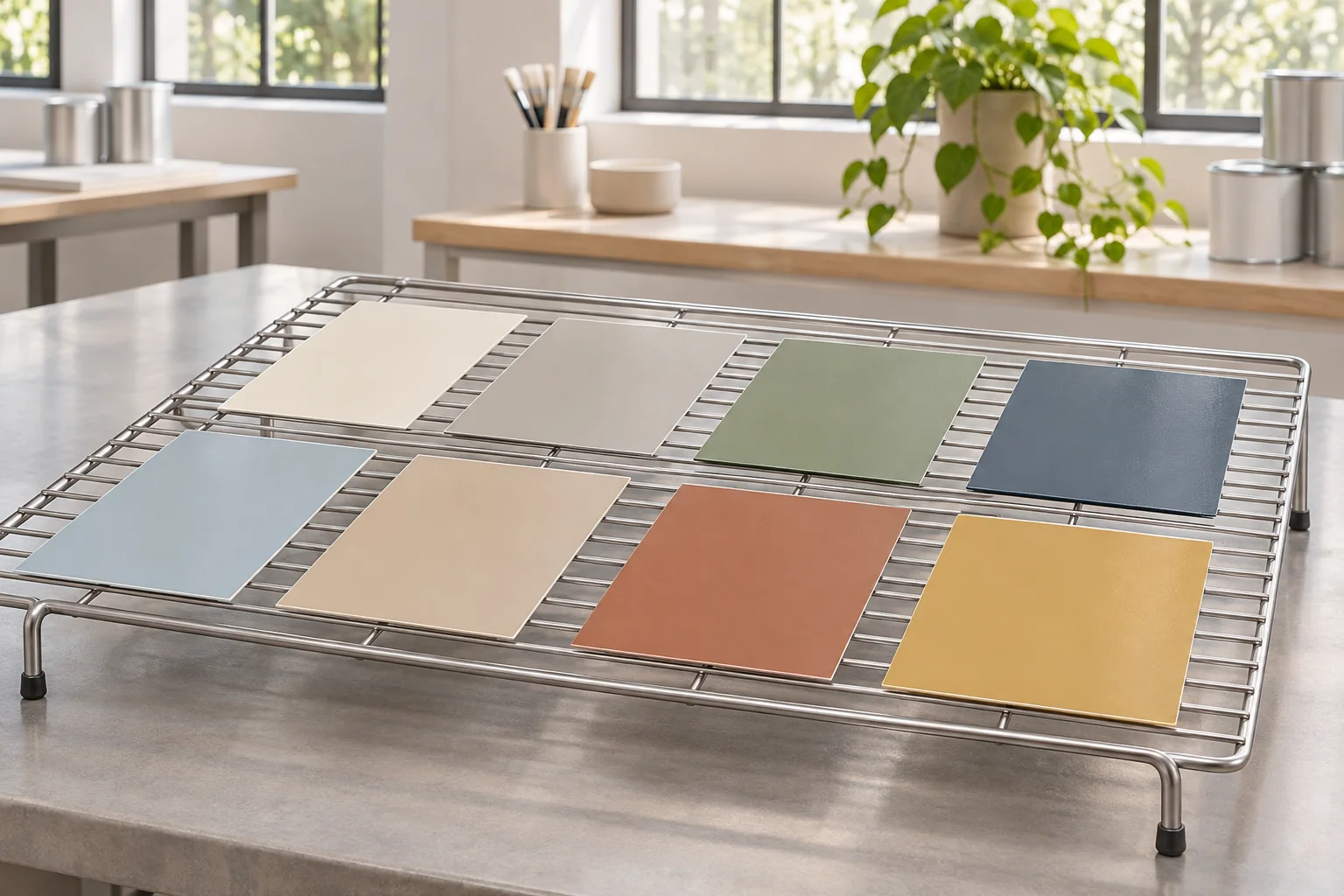
AI-generated concept illustration: Coated sample cards supported separately on a drying rack.
Name the stage being evaluated
Terms such as set-to-touch, tack-free and through-dry refer to different stages in coating development. BYK's drying-time equipment is designed to help characterize such progression. These terms should be used within a defined method rather than treated as interchangeable descriptions. [1]
Follow the coating system's technical requirements and avoid assigning one universal drying period to all samples. Film build, substrate and process conditions can differ. The useful specification identifies the condition required for the next operation and how it is assessed.
Keep appearance review tied to conditioning
Record when the sample was prepared and the state in which it is evaluated. Comparing a newly applied trial with an older conditioned master can introduce uncertainty. If a project requires evaluation after a defined conditioning procedure, apply that procedure consistently.
A sample that passes an early visual check may still need a later review if the approved method requires it. This is not an invitation to keep checking until a preferred result appears. The review sequence should be agreed before the decision is made.
Protect the sample between operations
Handle and support samples in a way that avoids marking, contamination or unintended contact while they are developing. Define when sheets can be moved, stacked, cut or assembled. A clean appearance before stacking does not prove that the surfaces will remain unchanged under pressure or contact.
Use representative trials for the actual construction. A small laboratory card stored separately may behave differently from a stack of larger coated sheets. The prototype should reflect the handling conditions that matter to the final product.
Separate timing problems from formulation problems
An illustrative batch shows surface marking after assembly even though the initial chips looked acceptable. The investigation should consider the condition at assembly, stacking pressure, contact materials and the relevant timing, not just the color formulation.
Keep process observations attached to the batch. If a change in waiting time or handling resolves the issue, document the validated condition. Do not allow an informal workaround to become an undocumented dependency known only to one operator.
Release against a defined state
| Next operation | Evidence to define |
|---|---|
| Color evaluation | Required conditioning and viewing method |
| Cutting or converting | Surface and support readiness |
| Stacking or assembly | Resistance to the relevant contact conditions |
| Packaging | Finished-sample condition and protection |
Check readiness to stack on a separate specimen
Suppose a card meets the color criterion at the specified conditioning time. At that same time, test a second, identically prepared card under the proposed stack load, contact material and dwell time. Inspect both contact surfaces for sticking, paint transfer and gloss marks. If marks appear, hold stacking and retest with a revised wait time or separator. Keep the optical specimen free of contact damage. ASTM D4946 covers blocking of architectural paints. Use the agreed product protocol for a card-and-separator stack. ASTM D4946 — Blocking resistance of architectural paints
Practical conclusion
The exact checks belong to the coating and product specification. The general principle is that readiness should be related to the next use of the sample. A disciplined drying and conditioning record helps separate material behavior from scheduling assumptions and makes later quality decisions easier to explain.