


PHOENiX Sample · 4 min read · Last updated
Printed color and paint-coated samples are useful in different parts of a color-selection process. A printed overview can communicate a collection efficiently, while a coated sample can provide physical evidence of a specified coating appearance. The important distinction is not simply premium versus economical. It is what the representation is expected to establish and how closely that expectation is defined.
A responsible sampling program explains the role of each medium rather than allowing the reader to assume that every colored rectangle is an equivalent production reference.
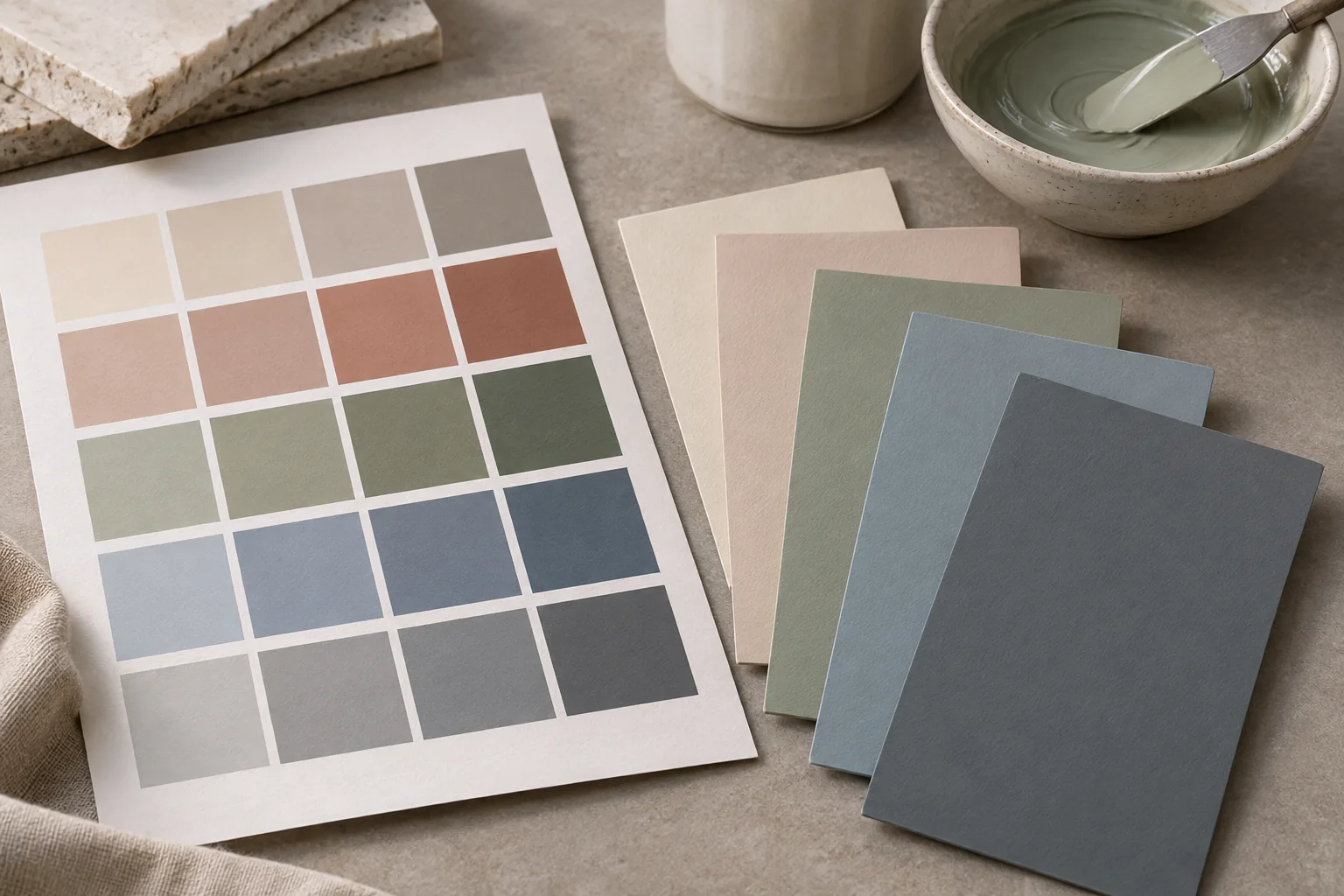
AI-generated concept illustration: A printed color overview beside individual coated samples.
Identify the decision being supported
An inspiration brochure may help a reader discover a palette. A shade card may support comparison and identification. A production approval sample must represent an agreed target under defined conditions. These tasks require different levels and types of evidence.
Start by assigning the role. If the purpose is an overview, printing may provide an effective and accessible presentation. If the purpose includes assessing a particular coating's finish, texture or interaction with light, a physical coated specimen may be needed. Neither choice removes the need for clear identification and approval rules.
Understand the reproduction chain
Printed images depend on the printing system, substrate, color management and reproduction limits. Digital previews introduce another device-dependent stage. The ICC describes how profiles and calibration support consistent display reproduction, but a controlled image remains a representation rather than the actual coating material. [1]
A coated chip also has conditions: the sample coating system, substrate, application and finish. The phrase real paint should not be taken to mean that the sample necessarily contains the exact retail formulation unless that is specifically established. Identify what the sample represents and how it was matched to the agreed reference.
Compare the useful strengths
| Purpose | Printed representation | Coated sample |
|---|---|---|
| Collection overview | Efficient integration with text and imagery | Physical color areas can support closer review |
| Product identification | Codes and names can be reproduced clearly | Codes must remain tied to the actual sample |
| Finish assessment | Usually an illustration of appearance | Can represent a specified physical surface |
| Approval | Suitable only for its agreed proofing role | Useful when construction and evaluation are defined |
This comparison is deliberately conditional. A poorly controlled coated sample is not automatically a better reference than a well-managed printed communication tool. The medium and its intended authority must be considered together.
Explore real-paint sample manufacturing for your project.
Test the representation against its claim
If the sample is presented as a reference for a specific finish, review the attributes that matter: color, gloss, texture, opacity and any directional effect. A small smooth chip cannot fully demonstrate a broad decorative pattern. A photograph cannot reproduce every angle-dependent highlight.
In an illustrative launch, a brand may use a printed foldout to introduce the range and supply coated chips for shortlisted shades. That can be a coherent system if the identifiers agree and the customer understands which item supports the final physical assessment.
Keep the handover between media clear
Maintain one controlled color register across print, digital and physical formats. Record the approved references and avoid treating an RGB or hexadecimal value as a complete specification for a coating. If a representation is updated, verify that its labels and linked references still point to the intended shade.
Assign each sample an approval role
Use a printed overview to shortlist shades by code. For the finalists, supply painted samples with the intended substrate and finish. Review color, gloss and texture under agreed conditions and retain the approved painted chip with its revision. Keep the printed overview linked by code so it still helps users navigate the range. X-Rite — Physical color standards
Practical conclusion
The most useful choice is the one that gives the user appropriate evidence at the right stage. Printed and coated formats can complement one another when their strengths, limitations and authority are described accurately.