


PHOENiX Sample · 4 min read · Last updated
A metallic or pearlescent coating can change dramatically as the observer, light or surface angle changes. A flat photograph captures only one arrangement of those variables. A single color reading can also leave important aspects of the appearance undescribed. For these finishes, the sampling task must represent both color and the way the coating behaves under changing viewing conditions.
This requires a different approval conversation from the one used for a uniform solid color. The aim is to define the relevant appearance attributes and the conditions under which they will be judged.

AI-generated concept illustration: Curved metallic panels showing directional reflections.
Separate color travel from texture effects
Effect coatings may show angle-dependent lightness or hue changes, while visible particles contribute sparkle and a broader textured impression. These observations should not be collapsed into a vague statement that the sample is too metallic. Describe which feature differs and under what viewing condition.
BYK's technical discussion of effect finishes distinguishes multi-angle color assessment from sparkle and graininess evaluation. That distinction helps organize the brief. Two samples may agree reasonably in color at one angle yet differ visibly in particle appearance, or show similar texture while their color changes differently as they are tilted. [1]
Preserve the application context
The substrate, coating sequence and application process can influence the appearance of an effect finish. A sample prepared by a different method may not represent the intended production surface adequately. Identify what the reference is expected to communicate: a palette selection, a decorative technique or an approval target for a defined coating process.
Keep orientation information when it matters. A reference cut from a larger coated sheet should retain enough identification to relate it to the original application direction. Otherwise, later comparisons may introduce a rotation without anyone noticing.
Choose a sample format that allows observation
A small chip can support identification, but a larger or appropriately shaped panel may make angle-dependent behavior easier to examine. Select the format around the viewing task. A binder that prevents a panel from being tilted can restrict the very characteristic the customer needs to inspect.
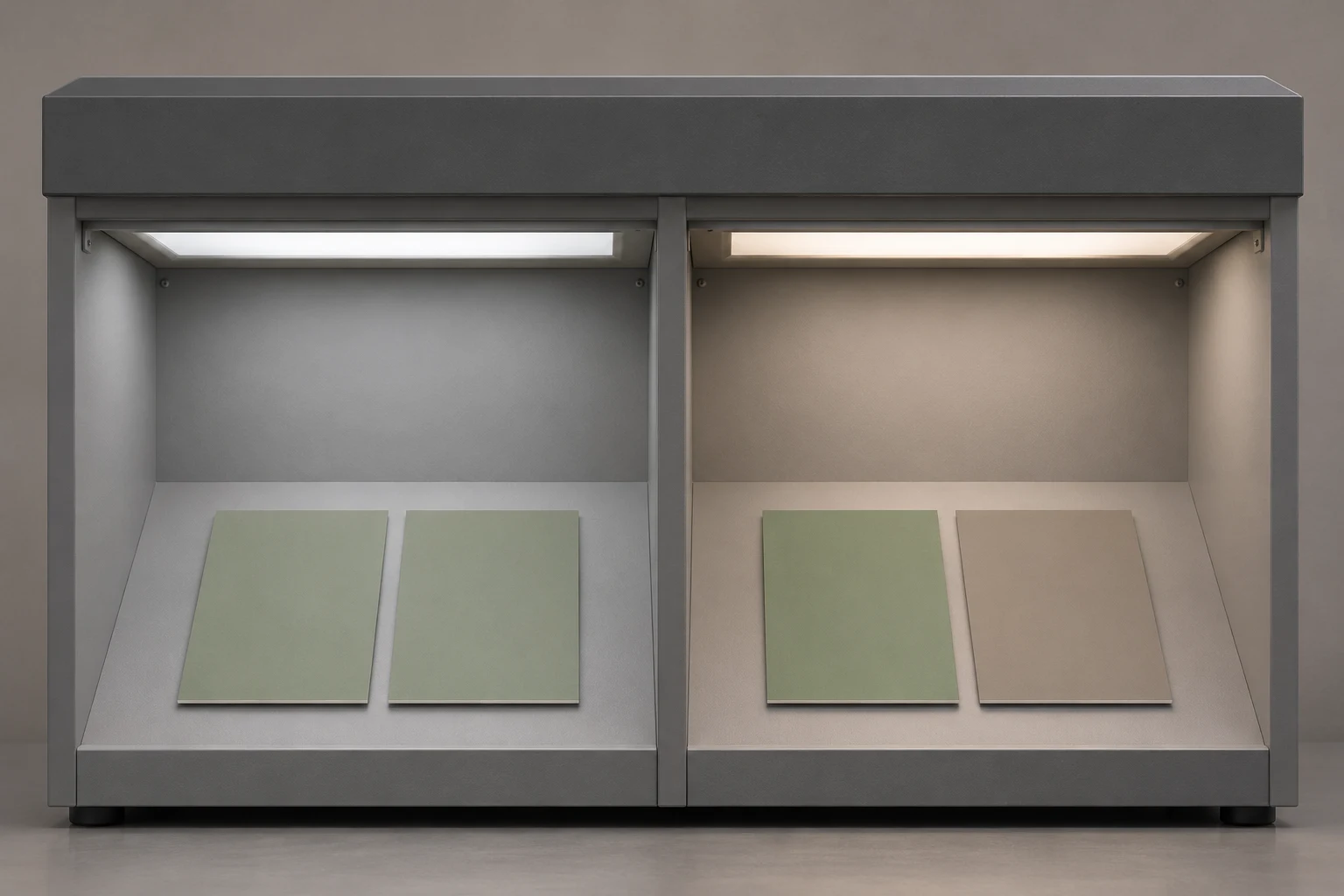
A useful presentation lets the observer compare master and candidate together while changing angle in a controlled way. Include lighting that makes the relevant features visible, and distinguish directional-light observations from diffuse-light observations. Photographs may document the setup but should not replace the physical pair.
Explore catalogues for textures and special finishes for your project.
Build a structured comparison
| Attribute | Observation to record |
|---|---|
| Face and oblique appearance | How lightness or hue changes with angle |
| Sparkle | Where and how individual highlights are visible |
| Graininess | The overall visual texture under suitable lighting |
| Gloss and surface uniformity | Reflection quality and local defects |
| Application direction | Whether orientation changes the comparison |
An illustrative complaint such as “the bronze looks flatter” can then be translated into something testable. The difference may concern color travel, reduced sparkle visibility or surface gloss. Each suggests a different investigation.
Define the evidence needed for release
Where instrumental multi-angle or effect measurements are required, agree the equipment, method and limits with the technical parties. Do not assume that a conventional solid-color spectrophotometer completely characterizes an effect finish. Retain visual evaluation alongside the relevant data.
X-Rite’s MA-T6 documentation distinguishes multi-angle spectral measurement from camera-based sparkle and coarseness assessment. This illustrates why an effect finish requires more evidence than a single color reading. [2]
Diagnose a mismatch that appears only at an angle
Align the application direction of the master and trial panels. Under fixed directional lighting, compare both at the same viewing angles and record where lightness, hue or sparkle diverges. Then use diffuse lighting to compare graininess. If the trial appears darker only at an oblique angle, check the agreed multi-angle readings and review application records before changing the pigment mix. Document the angle convention and the light used for each observation. BYK — Multi-angle and visual effect evaluation
Practical conclusion
The approved reference should include the physical specimen, its orientation and the conditions under which agreement was established. This gives the sample a clear role: it represents a specified appearance, rather than promising that a complex coating will look identical in every photograph or from every angle.