


PHOENiX Sample · 4 min read · Last updated
Two samples can agree convincingly in one room and separate visibly in another. This does not automatically mean that one sample has changed or that the observer is mistaken. When different spectral reflectance characteristics produce a match under one light but not another, the comparison can exhibit illuminant metamerism. This is particularly relevant when a painted sample must coordinate with a different coating, printed surface or other material.
The practical issue is the reliability of the pair across the environments that matter. A good assessment starts with the intended use of the samples, rather than testing many arbitrary lamps and expecting every possible comparison to remain identical.
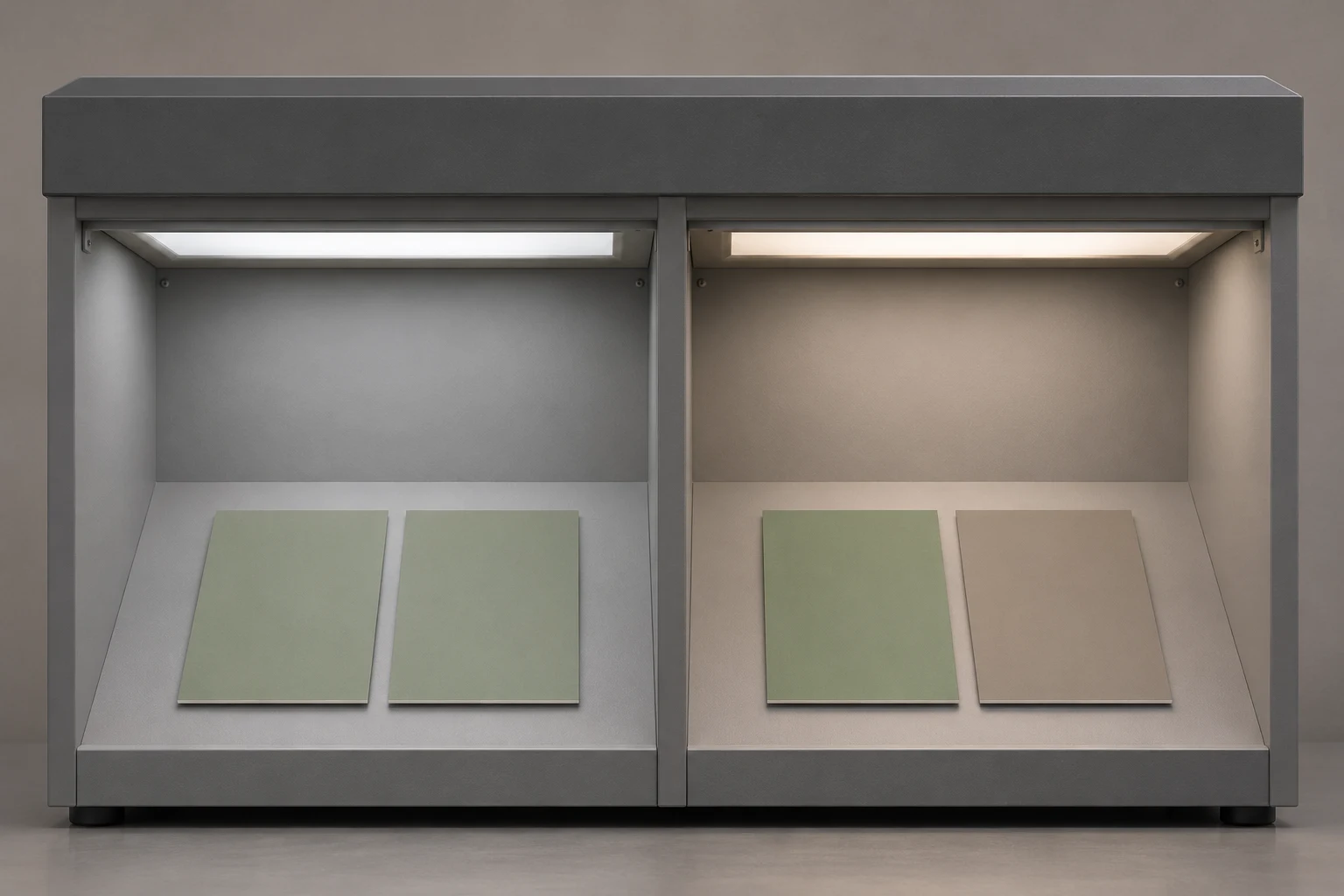
AI-generated concept illustration: Sample pairs shown in adjacent lighting environments.
Follow the pair, not an isolated swatch
A single surface may look different under different lighting. Metamerism concerns the relationship between samples: the pair agrees under one condition and disagrees under another. This distinction changes the investigation. Comparing photographs from two phones, taken at different times, introduces additional variables and cannot isolate the behavior of the original pair.
Keep the physical master and candidate together. Preserve their orientation and viewing distance as far as practical. Use a neutral surround and avoid colored objects immediately beside them. The aim is to change the illumination while keeping the comparison itself stable.
Select lighting from the actual journey
A coating sample might be selected in a store, reviewed in an office and used in a home. Identify the conditions important enough to influence approval. A daylight condition may be the primary reference, with additional lighting selected to represent the application. Do not assume that matching a lamp's color temperature reproduces its complete spectral characteristics.
Document the light source or viewing system and its condition. Unidentified room lighting is useful for observing a concern, but weak as the only basis for a repeatable approval. A review should state which condition is mandatory and which is supplementary, especially when the application involves several different environments.
Distinguish a lighting problem from a surface problem
A comparison can also change when a glossy panel is tilted or a textured surface is rotated. Before attributing a mismatch to metamerism, check whether geometry or reflection caused the difference. Keep surface finish in the assessment and do not rely exclusively on an instrument's single color-difference result.
Spectral data can help a laboratory investigate the pair, while visual review establishes whether the difference matters in use. X-Rite's explanation of metamerism provides the underlying distinction between a match under one source and a mismatch under another. The acceptance decision still belongs to the agreed product specification. [1]
An illustrative coordination review
Imagine a wall-paint chip and a coated cabinet sample intended for one interior. They agree in the daylight review but separate under the installed lighting. The next step is to confirm the actual lamp and compare the same samples in a controlled setup that represents it. Replacing the chip because it looks wrong in a photograph would bypass the real problem.
If the difference is unacceptable, the teams can evaluate a new coating formulation, a different material pairing or a revised palette. The choice depends on which component can change. A documented compromise may be more realistic than demanding a perfect match under every possible source.
Record the boundary of the approval
Understanding the illustration
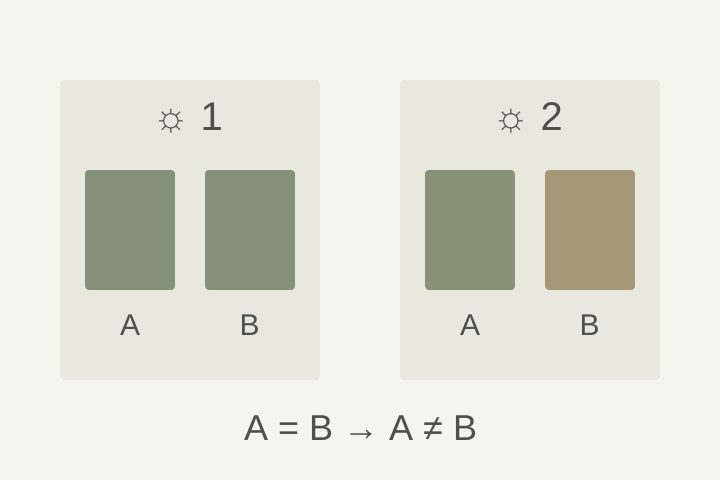
Original educational diagram: PHOENiX Sample.
Check what changed between observations
Take the same two samples and keep the observer and geometry fixed. If the pair matches under the reference illuminant and separates under the test illuminant, the result is consistent with illuminant metamerism. If the light stays fixed and two observers disagree on the match, investigate observer metamerism. A controlled comparison helps isolate the variable. To confirm a metameric pair in the strict colorimetric sense, check both the match in tristimulus values under the stated conditions and the difference in spectral response. [3]
Practical conclusion
The final record should identify the sample pair, their revisions, the lighting conditions and the observations. State whether acceptance applies under all tested conditions or only a defined subset. Retain the pair, not merely one swatch. This makes later discussions about lighting specific and gives designers, purchasing teams and laboratories a shared basis for action.