Real coating films · Printed color references · Informed specification
Real Paint Samples vs. Printed Samples
Understanding the Difference. Choosing with Confidence.
A practical technical comparison of coated color samples and printed color representations for fan decks, color cards and professional presentation systems.
Relevant technical references: ISO/CIE 11664-6:2022 — CIEDE2000. Reference links provide context only and do not imply certification or conformity.
TWO TECHNOLOGIES · DIFFERENT PURPOSES
When Color Must Be Seen, Compared and Trusted
Whether a color is shown on a fan deck, a specification card, a retail chip or a marketing sheet, its production method influences how people interpret it. Real paint samples carry a physical coating layer, while printed samples reproduce color through ink or toner on a selected substrate. Both have valid uses, but they do not communicate surface appearance in exactly the same way.
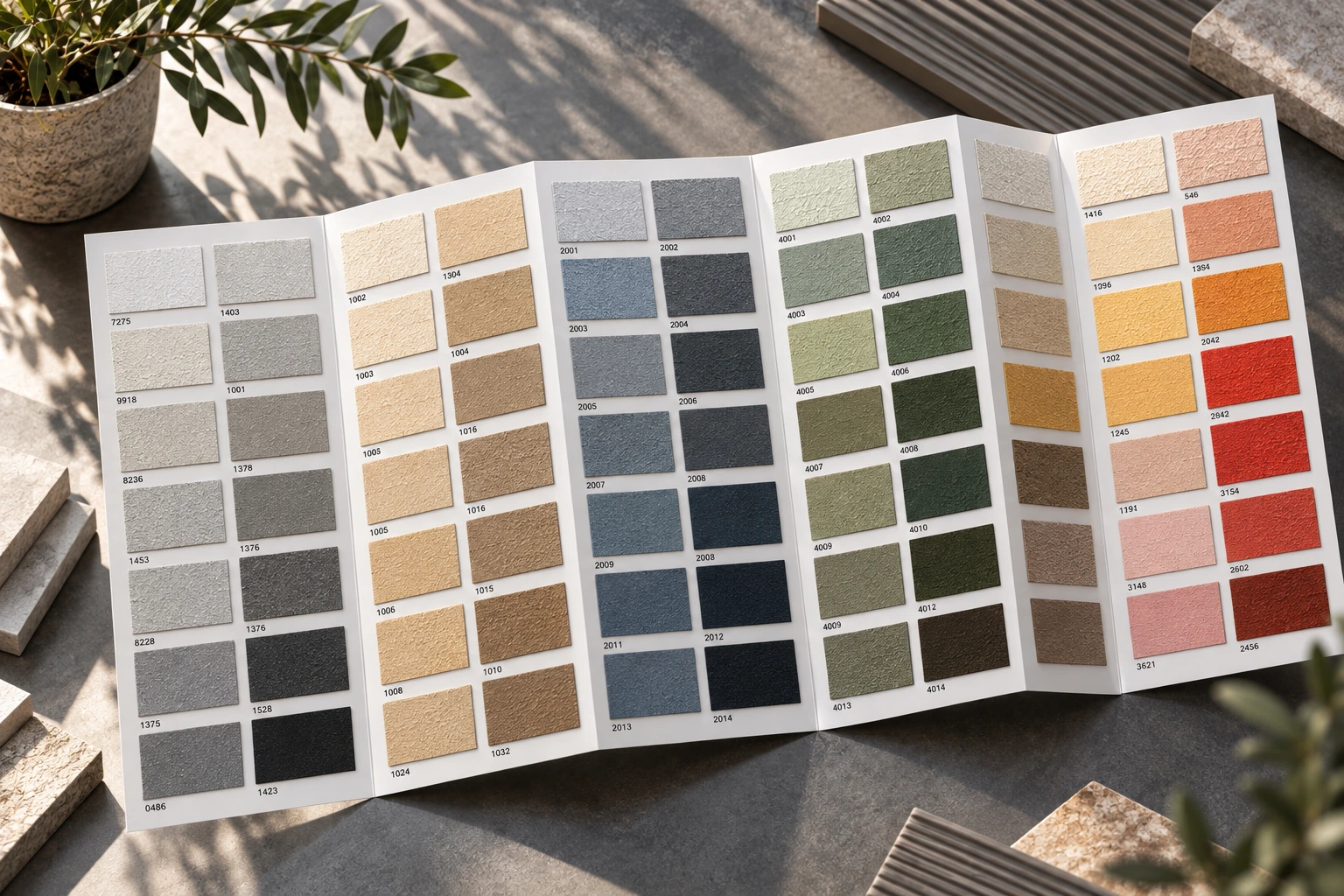
Textured coating samples mounted on a folding presentation card
01 / PHYSICAL COATING FILM
Real Paint Color Samples
Purpose-developed sample coatings form a physical film on paper, card or another specified backing. This construction can help communicate the intended color together with surface features such as sheen, film appearance and certain decorative effects.
An important distinction: a real-paint sample does not automatically have the identical chemical formulation or service performance of the customer’s final wall or industrial paint. Visual equivalence must be specified and evaluated.
Printed color references and a color wheel used during a design review
02 / INK-BASED REPRODUCTION
Printed Color Samples
Printing uses controlled ink or toner systems to reproduce color on a chosen substrate. It can be well suited to explanatory graphics, labels, packaging, brochures and applications where production flexibility and integrated information are important.
The achievable appearance depends on the printer, inks, substrate, color management and finish. Even carefully managed printing may not reproduce every pigment effect, surface texture or gloss characteristic of a coated sample.
SIDE-BY-SIDE TECHNICAL VIEW
How the Two Methods Compare
The relevant question is not simply which sample looks better—it is which construction represents the customer’s decision-making requirements.
Consideration
Real paint coating sample
Printed color sample
Color representation
Color is viewed through a physical coating film formulated for the sample.
Color is reproduced using inks or toner and the printing system’s color gamut.
Gloss and surface character
Can be developed to represent specified sheen or film appearance, subject to process and approval.
Primarily shaped by ink, substrate and print finish; may not match a specific paint film.
Texture and special effects
Physical decorative effects may be represented when compatible with the sampling method.
Visual simulations can communicate appearance, but may not reproduce actual relief or effect-pigment behavior.
Color accuracy
Depends on reference control, coating, substrate, application, drying and viewing conditions.
Depends on profiles, calibration, gamut, inks, substrate and viewing conditions.
Best-fit uses
Coated color fan decks, finish-sensitive chips and selected surface sample programs.
Brochures, graphics, informational color charts and other suitable print applications.
Reproducibility
Requires controlled coating and verification against the approved reference.
Requires controlled print workflow and verification against the approved reference.
These are general technical distinctions, not guaranteed properties or performance figures for every sample or production technology.
APPEARANCE MATTERS
Color Is More Than a Number
Two samples can produce similar color measurements yet look different because of gloss, surface texture, substrate or viewing geometry. Special-effect finishes may change appearance with illumination and observation angle, making a single printed representation insufficient for some approval tasks.
Reliable evaluation therefore starts with an agreed reference, defined viewing conditions and a clear statement of which visual characteristics the sample needs to communicate.
Consider illumination and metamerism.
Specify gloss or finish where relevant.
Compare approved samples under appropriate viewing conditions.
Assess the final dried coating or finished print—not an intermediate state.
Color references compared across sample cards and presentation formats
PRACTICAL SELECTION GUIDE
How to Choose the Appropriate Sample
01
Define the decision
Is the sample intended for color selection, finish approval, visual merchandising, technical reference or printed communication?
02
Set the visual target
Clarify the approved shade, gloss, texture and any angle-dependent effects that matter.
03
Choose a suitable format
Select fan-deck leaves, cards, chips, catalogs or combined graphic-and-coated components.
04
Approve a physical proof
Review a representative production sample against the agreed reference and acceptance criteria.
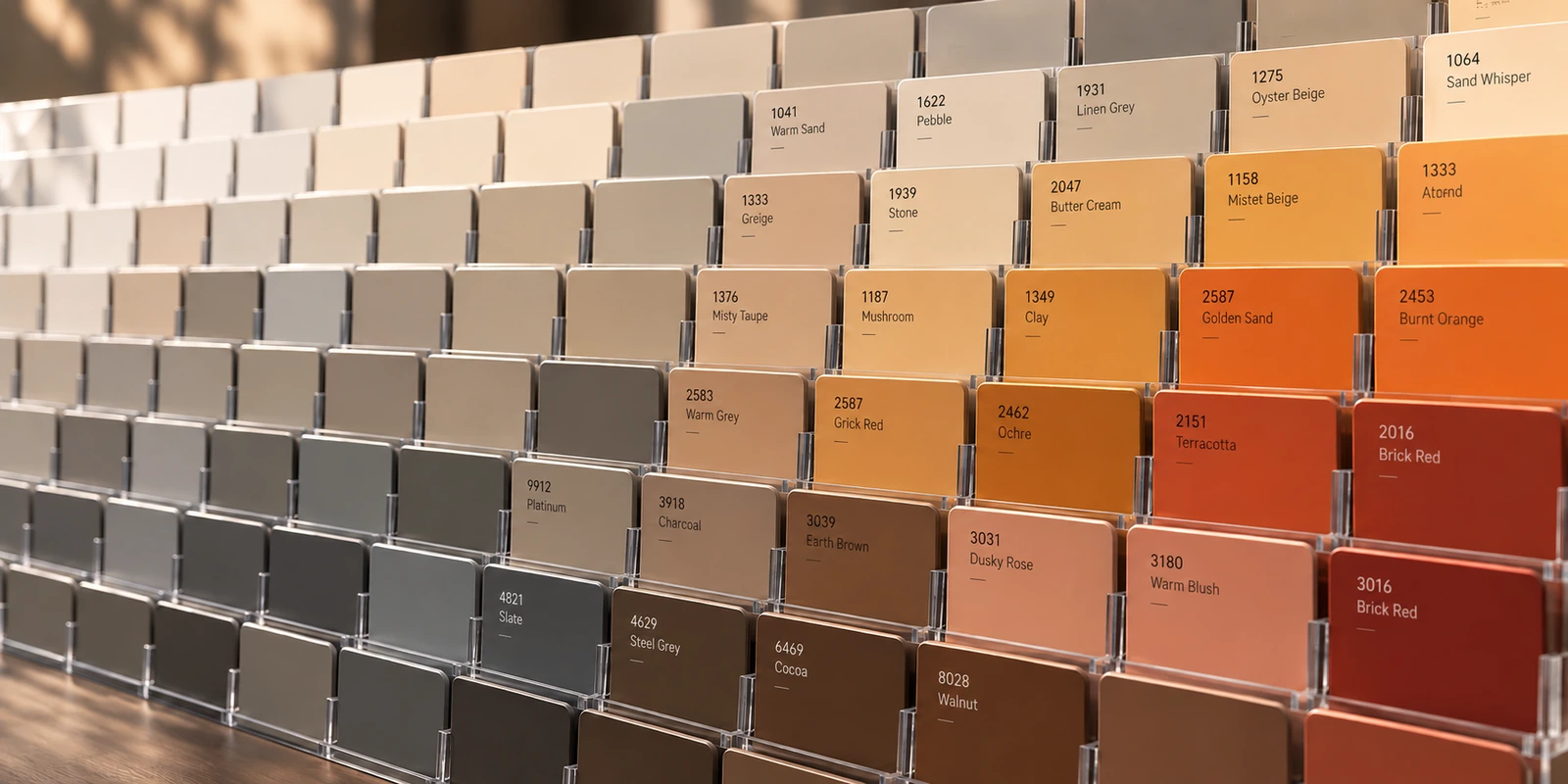
Color chips with printed color names and identification codes
BEST OF BOTH WHEN APPROPRIATE
Coated Samples and Printed Information Can Work Together
A professional color communication tool need not rely on one method exclusively. A color card may combine physically coated swatches with printed descriptions, color codes, branding and application guidance.
For international brands and distributors, the most effective specification is often the one that assigns each technology the job it performs best: the coating communicates the approved sample appearance, while print delivers clear supporting information.
TECHNICAL QUESTIONS
Frequently Asked Questions
Are real paint samples always more accurate than printed samples?
No. Accuracy depends on how the reference is defined and controlled, the equipment, materials and viewing conditions. Physical coating samples may better convey certain paint-film characteristics, while suitable printed references can be effective for other uses.
Is the coating used on a fan deck identical to the final wall paint?
Not necessarily. Professional fan-deck coatings can be purpose-formulated for sample production. An identical formulation or a defined appearance match must be established as a separate project requirement.
Can printed samples reproduce metallic or textured finishes?
Printing can illustrate many effects, but a conventional flat print may not replicate real texture, tactile relief or angle-dependent optical behavior. The chosen sample should be evaluated against the required effect.
What affects perceived color differences?
Lighting, metamerism, gloss, substrate, texture, sample size and observation conditions can all affect appearance. Numerical color difference alone does not explain every visible variation.
Can one product include both real-paint swatches and printed elements?
Yes. Depending on the design and approved production process, printed branding and information can accompany coated swatches within the same presentation tool.