Define Requirements
Confirm the target colors, finish, format, reference standard and intended use.
Purpose-developed coatings, carefully managed application and drying principles for professional color fan decks, color cards and surface sample programs.
Technical content by PHOENiX Sample · Updated October 2026
Relevant technical references: ISO 9117-1:2009 — Through-dry state and time · ISO 9117-3:2010 — Surface-drying test. Reference links provide context only and do not imply certification or conformity.
A professional color sample must communicate a shade and its intended surface character in a format people can handle, compare, store and present. That outcome depends not only on pigment selection, but also on how the coating is formulated for the sample substrate, applied and dried.
PHOENiX Sample uses coating systems purpose-developed for the manufacture of color fan decks and professional sample formats. These are sampling coatings selected for their role in color communication; they should not automatically be assumed to have the same formulation, durability or end-use performance as the customer's retail or architectural paint.
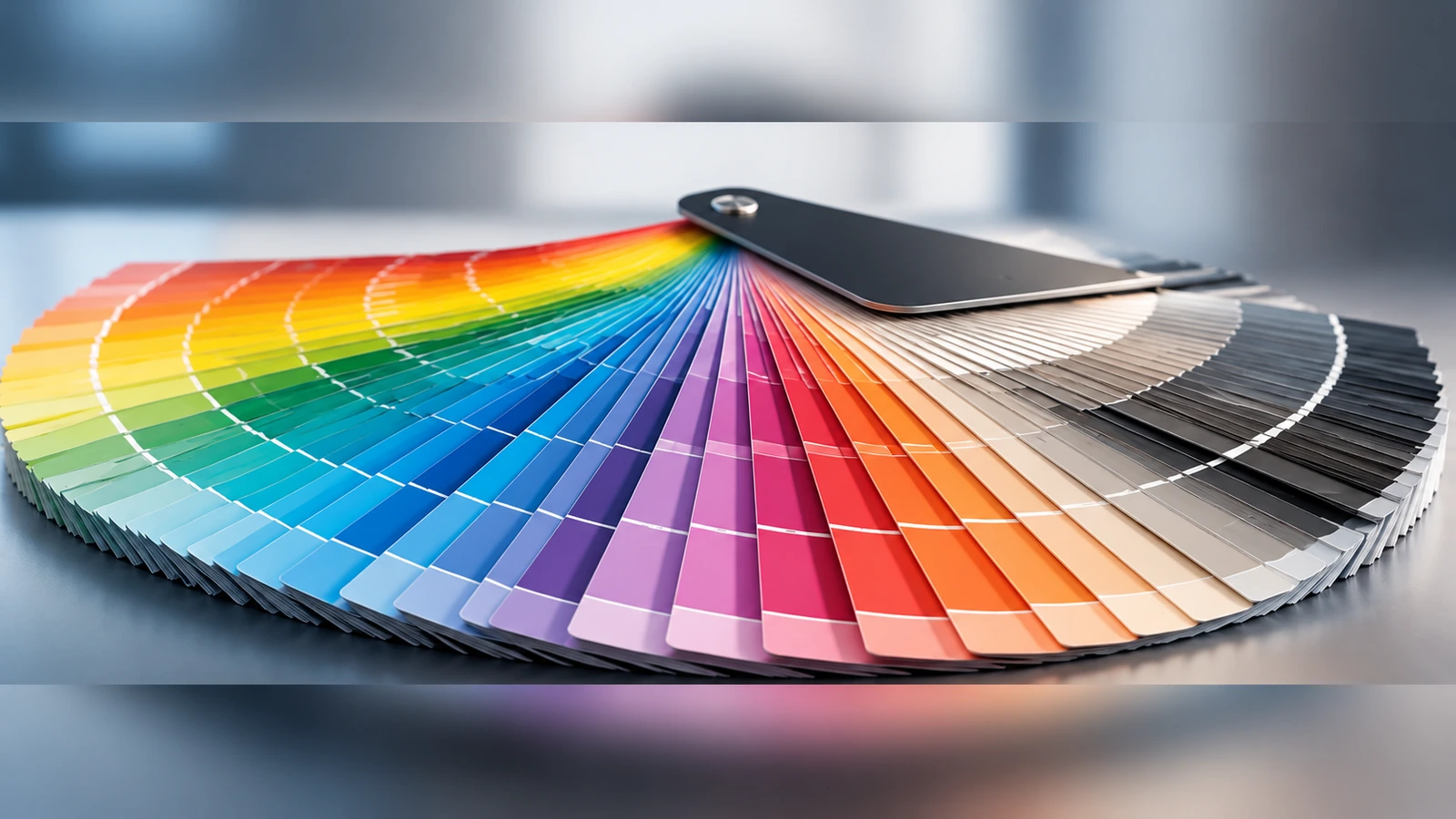
Fan decks require many individually finished leaves that can be organized into a portable color library. A coating intended for that purpose must be considered together with the sheet material, the desired color and sheen, film uniformity, handling and the finishing process.
The right coating strategy helps the sample function as a practical reference—not simply as a painted sheet. The target is an agreed visual result suitable for a specific sample program.
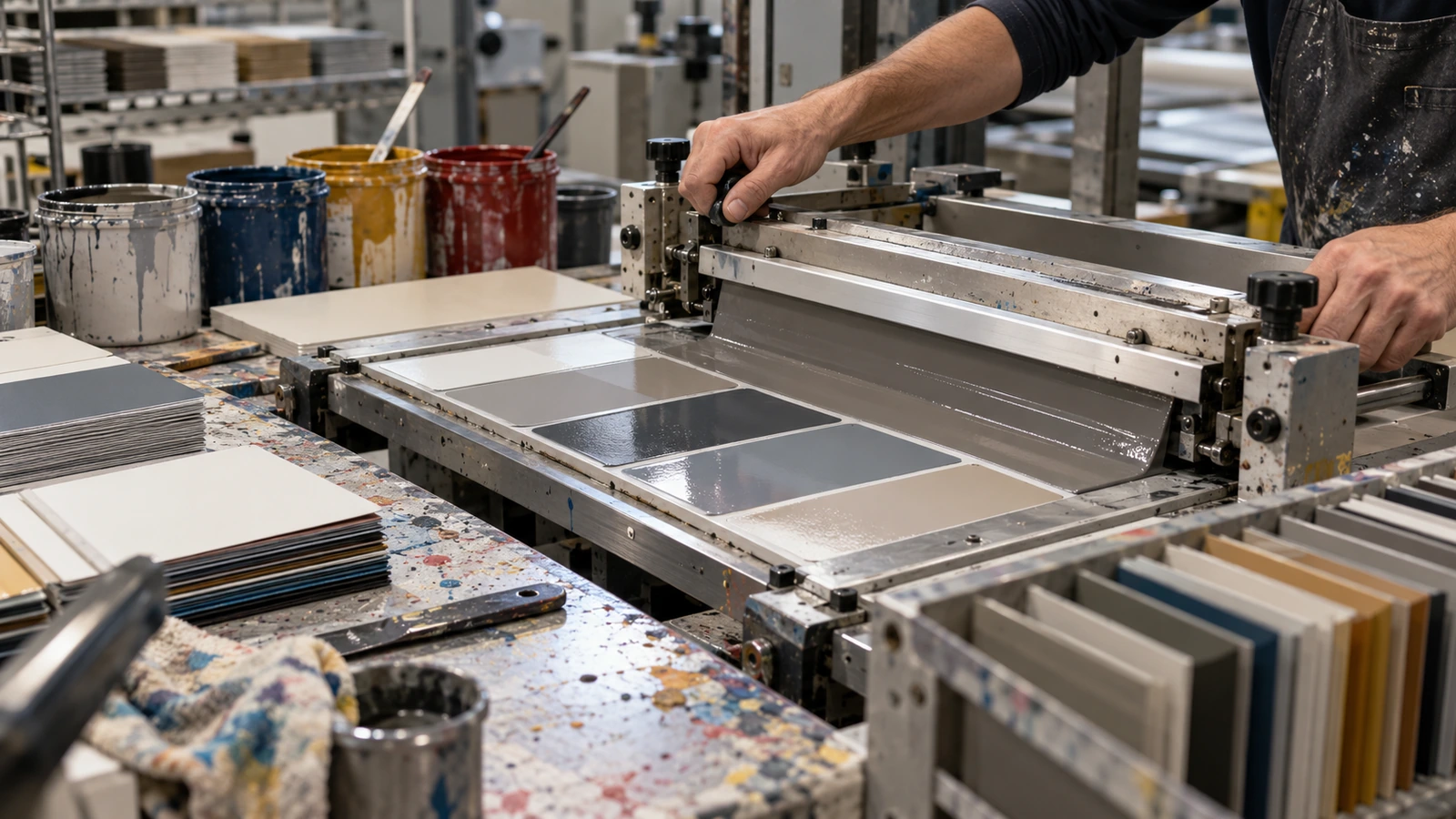
Successful sample production requires a balanced approach to appearance, material compatibility and manufacturing consistency.
Binder, pigments, additives and other constituents influence appearance and film behavior. Specific formulations are chosen according to the project, without publishing proprietary recipes.
Paper, card or other approved backing materials interact with applied coatings differently. Absorption, smoothness and surface preparation affect the result.
A repeatable application approach helps manage visible streaking, uneven coverage and variations across a sheet.
A coating can change in appearance as water or other volatile constituents leave the film. The final target must be judged after appropriate drying or curing.
Gloss, film build and surface character influence how a color is perceived. Color alone is not a complete description of a sample.
The dried sample must be considered for cutting, sorting, fastening, stacking and everyday handling in its intended presentation format.
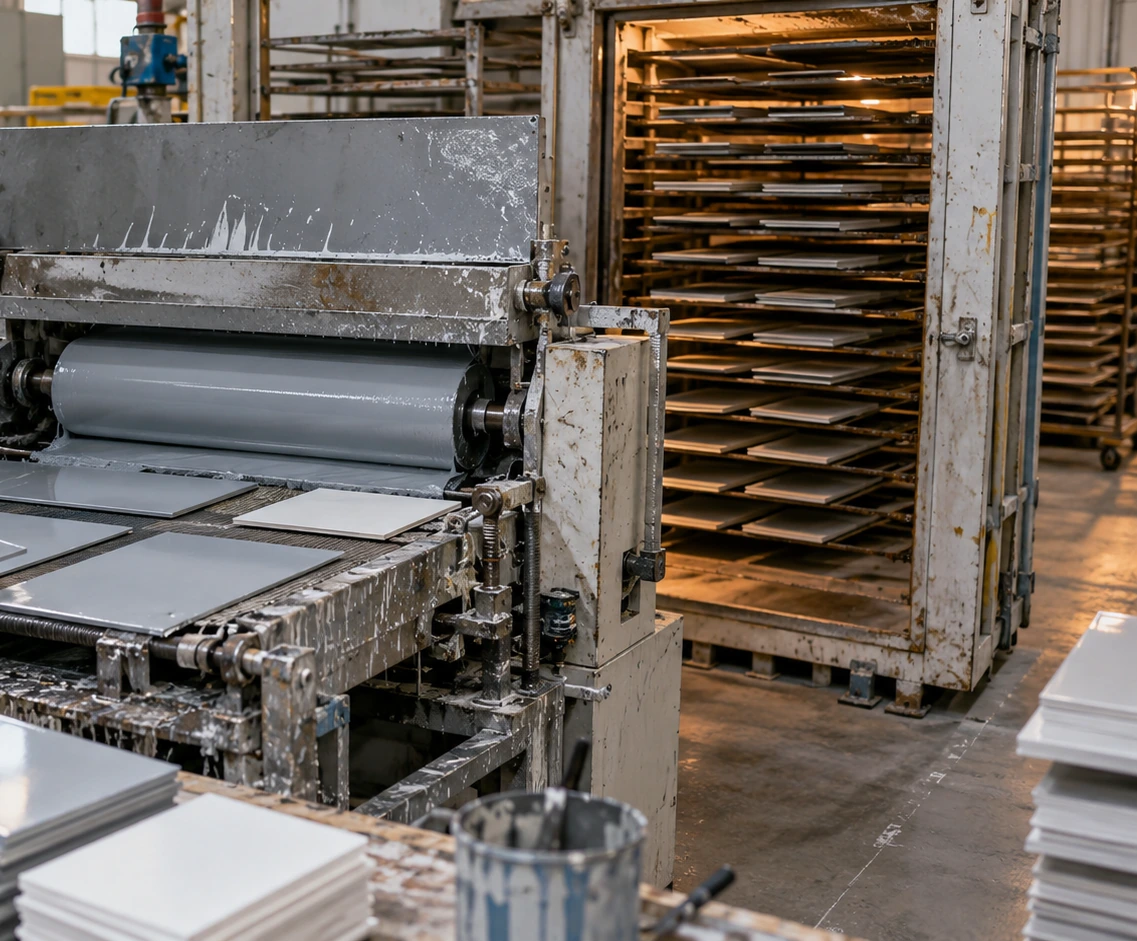
Coating consistency starts with a defined color target, suitable substrate, appropriate material condition and a controlled application plan. Sheet behavior, surface coverage and the intended finish all influence how an approved sample will appear.
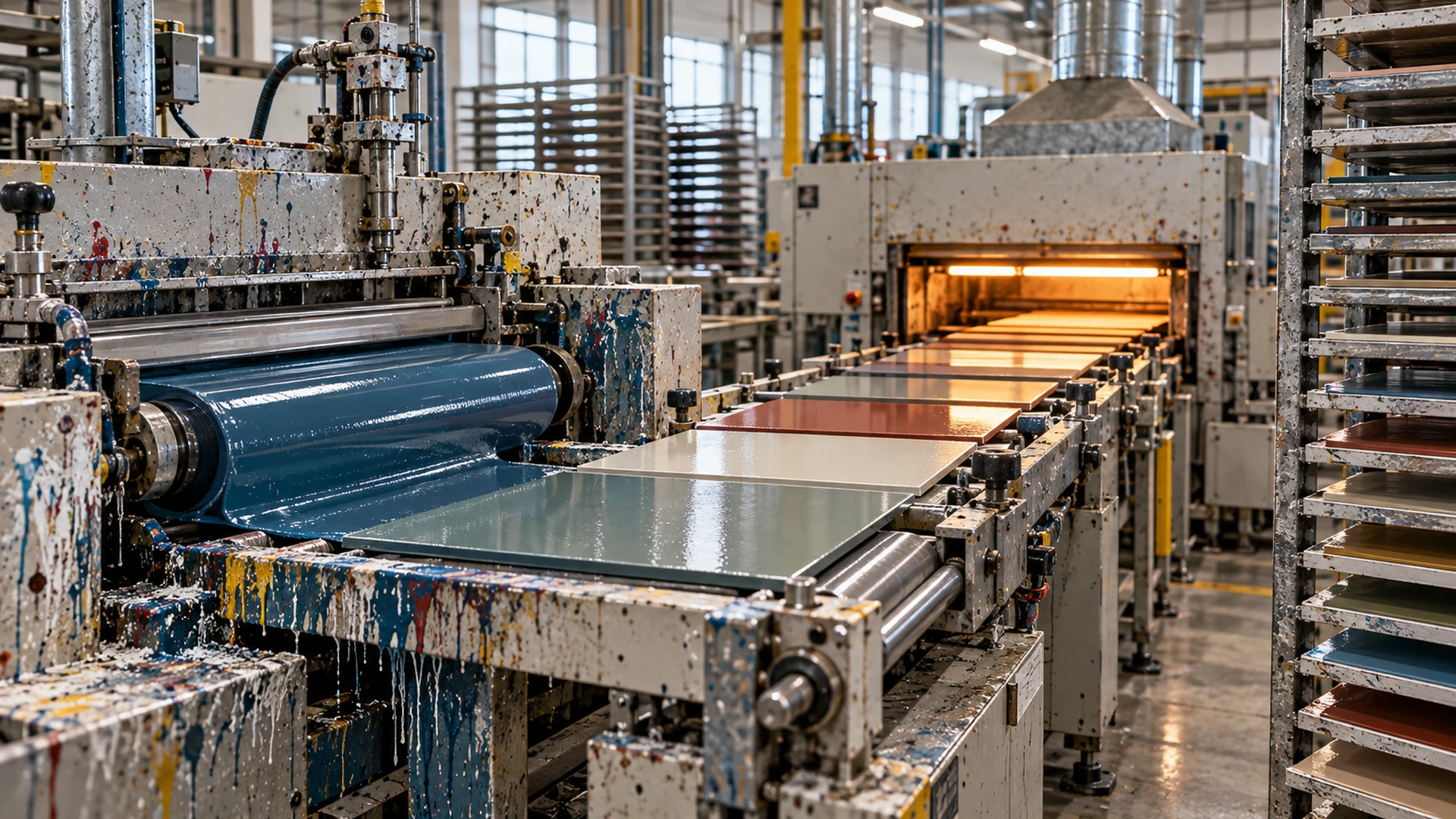
Depending on the technology and project, application quality may be assessed through visible film uniformity, surface defects, color appearance and suitability for downstream cutting or assembling. Different formats can call for different application methods.
Rather than claiming one method suits every product, the process should be specified around the approved sample construction and finished appearance.
Drying is not simply a waiting period. It is the stage in which the freshly applied film develops the surface characteristics needed for inspection and further manufacturing.
Air movement and removal of moisture or vapors can influence drying behavior. Conditions must suit the coating formulation and production setup.
Heat must be managed to support the intended drying process without compromising the coating film or substrate. One temperature is not appropriate for every paint system.
Available drying time interacts with applied film quantity, substrate and process design. Parameters are determined during manufacturing validation.
The finished film should be assessed for the properties relevant to the project, such as uniform appearance, handling and readiness for conversion into sample products.
No fixed oven temperature, line speed, evaporation rate or drying time is promised on this page. Actual values depend on the approved coating chemistry, substrate, equipment and production specification.

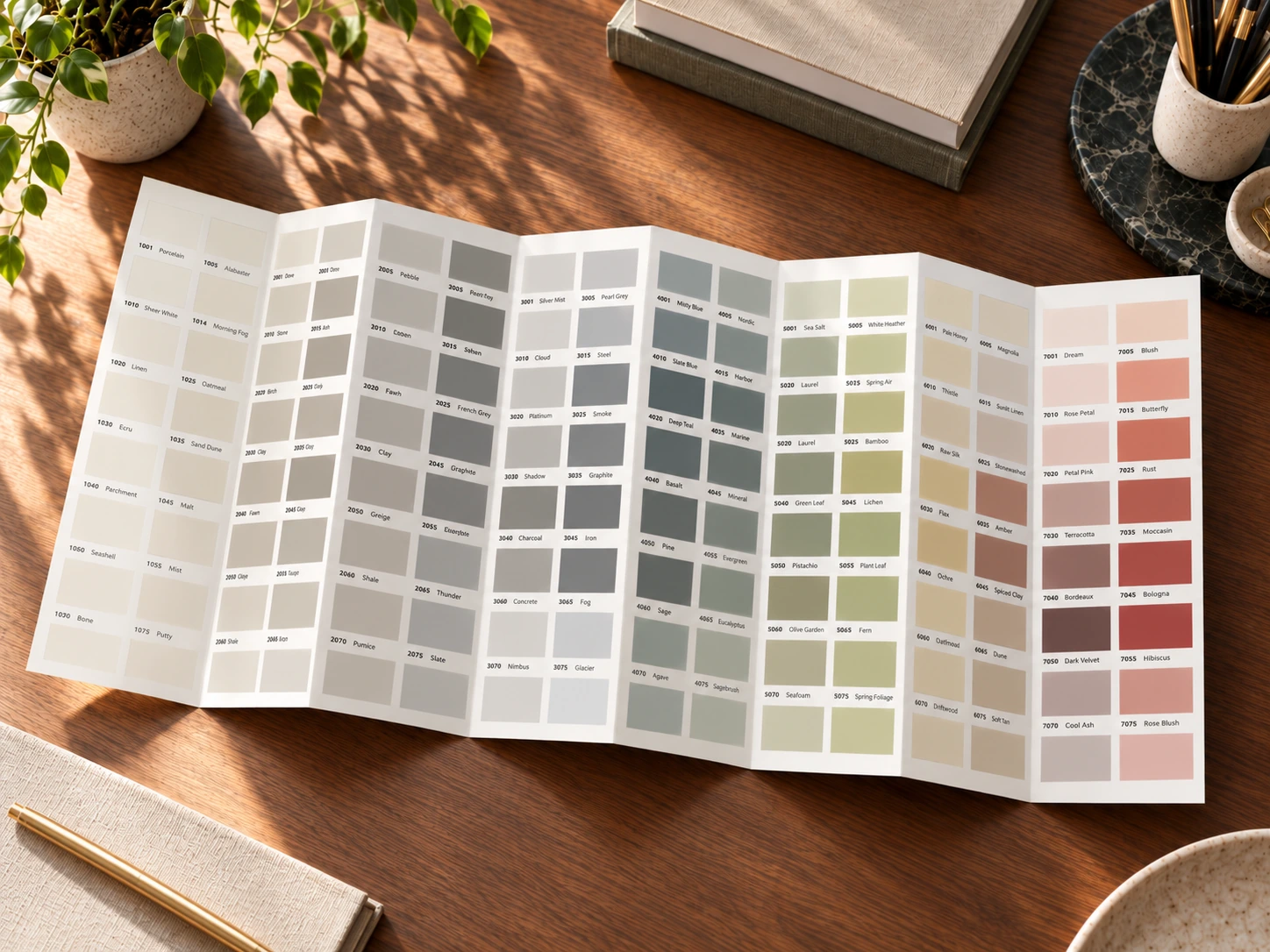
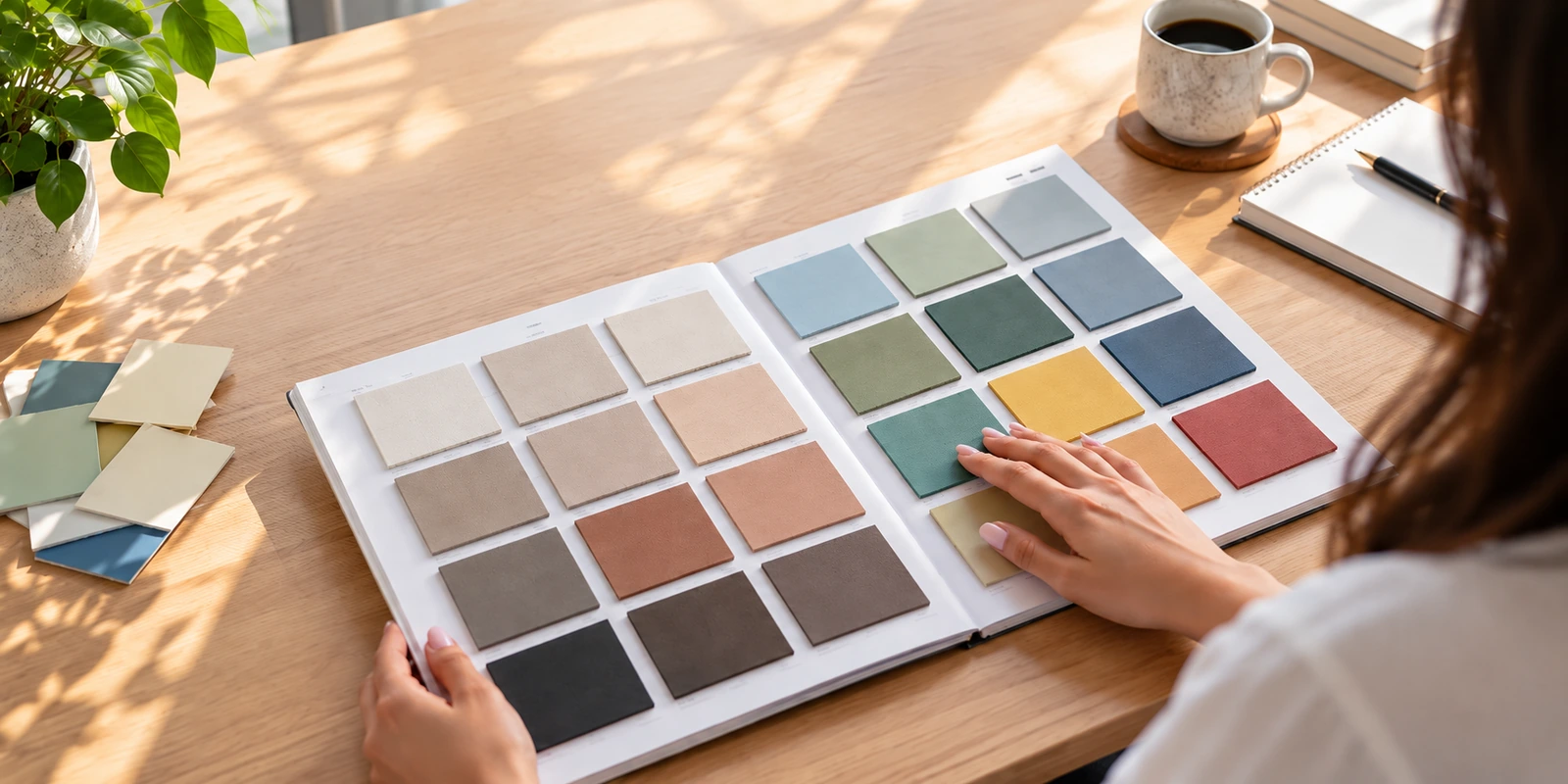
Two samples with similar measured color can appear different because of gloss, texture, surface coverage or lighting. That is why a professional sample is judged as a complete surface, not as a color number alone.
After drying, a sample can be reviewed against the approved physical reference and agreed quality criteria. Appearance and suitability for the next stage of manufacture both matter.
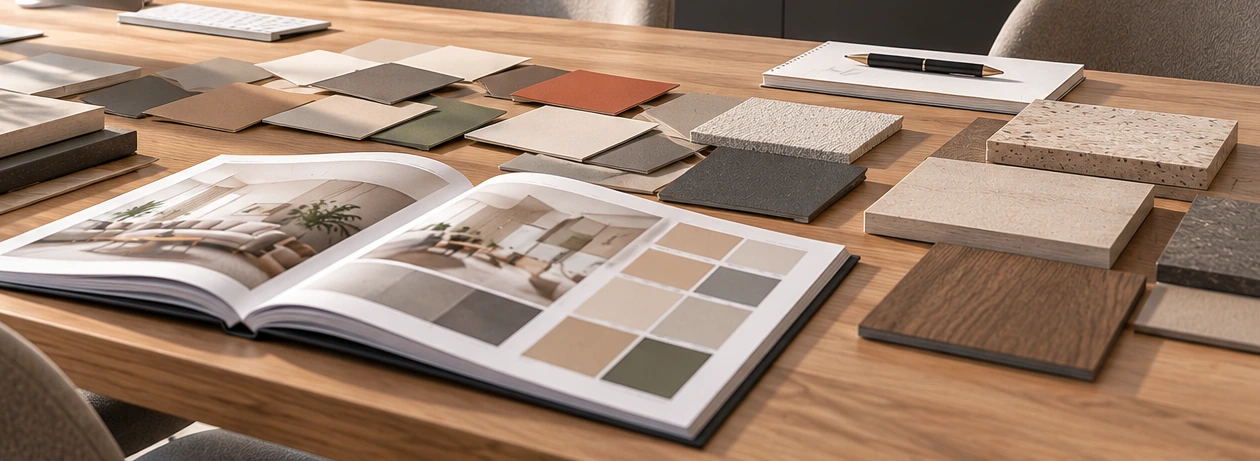
A practical project framework connecting the coating system with the final manufactured color reference.
Confirm the target colors, finish, format, reference standard and intended use.
Consider sample-specific coating behavior and compatibility with the selected substrate.
Assess trial application and target appearance before approving the production reference.
Manage application conditions relevant to coverage, film formation and uniformity.
Allow appropriate film development and inspect the dried sample against the agreed standard.
Cut, sort, fasten or mount the approved samples into the selected presentation format.
A purpose-developed sampling approach can support a range of presentation tools, each with its own construction and appearance requirements.
In coating technology, drying often involves removal of water or solvent and development of a film, whereas curing can involve chemical changes or crosslinking. Some systems involve both, and the exact mechanism depends on the coating chemistry.
Produce a physical color reference with the agreed appearance and handling characteristics appropriate to the sample format.
Deliver performance on walls, wood, metal or other service surfaces; this may involve different performance tests and formulations.
This page explains general coating principles relevant to sample production; it does not publish proprietary chemistry, assert an unverified certification or guarantee equivalence to customers' commercial paint systems.
Not necessarily. Fan decks can use purpose-formulated coatings designed for professional sampling. The desired visual relationship to the customer's paint, and any material equivalence, are specified separately.
As the coating film forms, changes in solvent or water content, pigment arrangement and surface finish may affect appearance. A completed sample should be judged after the appropriate drying or curing stage.
Yes. Substrate absorbency, surface texture and background color can influence coating coverage and perceived color. Substrate selection is part of the sample design.
No. Excessive or unsuitable conditions may affect the film or backing. Drying parameters are determined for the specific formulation, equipment and substrate.
Projects can be discussed against an approved reference and finish brief. Feasibility, acceptance criteria and production requirements are reviewed for the requested sample format; an exact numerical guarantee should not be assumed without an agreed specification.
Provide color references, desired sheen or texture, intended product format, sample quantity, target substrate where relevant and any approval or inspection requirements.
Tell us about your target colors, finish requirements and fan deck or color card format. Our team can review the brief and discuss the suitable sample-making approach.
Explore related technical topics and how they connect to color-sample manufacturing, quality, coating technology and finished fan decks.
Have a color sampling project in mind? Our team is ready to help you turn your requirements into tailored sampling and presentation solutions.
Request a Quote